

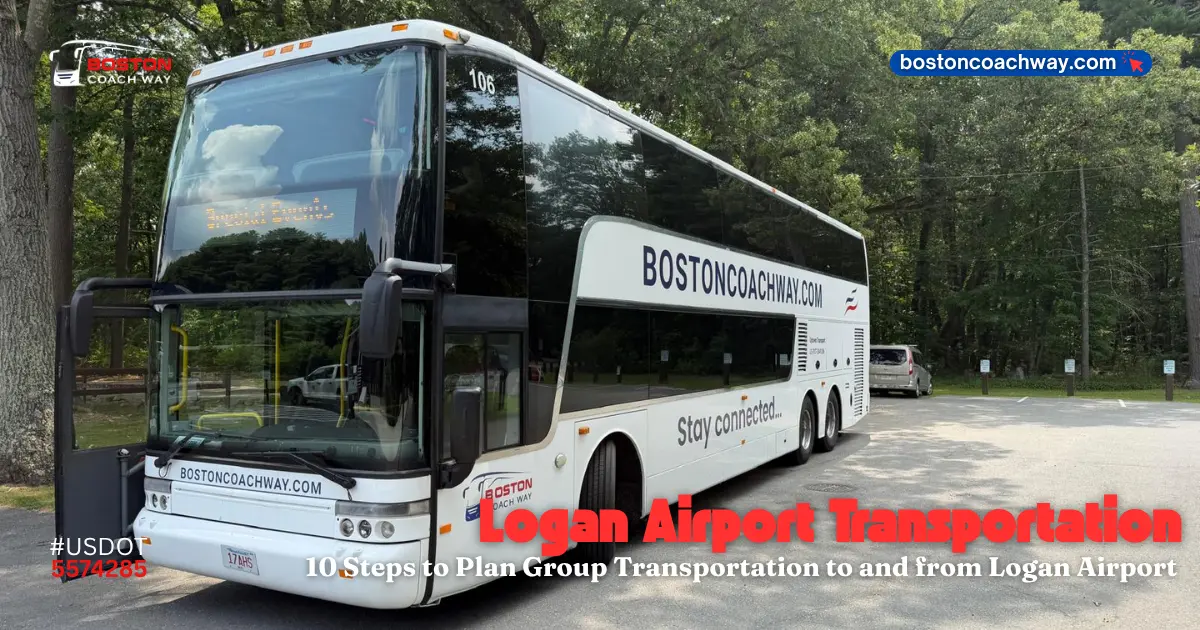

Planning group transportation to and from Boston Logan International Airport starts with coordinating passenger numbers, flight schedules, luggage requirements, and travel destinations. A reliable plan connects these details with the right vehicle, pickup locations, and travel schedule. From selecting a Sprinter van, minibus, or coach bus to coordinating airport pickups, managing delays, and confirming reservations, each step affects the journey.
In this guide, we’ll explain 10 practical steps to plan group transportation to and from Logan Airport, helping you organize vehicle arrangements, passenger communication, and airport transfers efficiently.
Table of Contents
1. Identify Transportation Requirements
Start by identifying the group’s transportation requirements, including passenger count, travel purpose, pickup location, and final destination. Determine whether the group needs transportation from Logan Airport to a hotel, office, or event venue, or from a pickup location to the airport. Record the travel dates, number of trips, and any intermediate stops. Identify special requirements, such as wheelchair accessibility, child seating, or additional boarding assistance. Also, confirm whether the group travels together or arrives on separate flights. These details establish the vehicle capacity, transportation schedule, and service requirements before arranging group transportation in Boston.
2. Collect Flight Information
Collect every passenger’s flight information to coordinate Logan Airport pickups and drop-offs accurately. Record each airline, flight number, arrival or departure date, scheduled time, and terminal. Logan Airport has four passenger terminals: A, B, C, and E. Identifying the correct terminal helps organize passenger meeting points and vehicle arrangements. For groups arriving on multiple flights, compare arrival times and identify passengers who can share the same pickup schedule. For departing groups, identify the earliest flight and applicable airline check-in requirements. Keep all flight details in one shared itinerary so the transportation coordinator can monitor schedule changes and communicate updates.
3. Calculate Passenger and Luggage Requirements
Calculate the total passenger count and luggage volume before selecting a group transportation vehicle. Record the number of checked suitcases, carry-on bags, backpacks, and oversized items, such as sports equipment or musical instruments. Consider the storage space required for each luggage category, not just the number of passengers. For example, 30 passengers carrying 30 large suitcases require more storage capacity than 30 passengers traveling with backpacks. Also, account for children, mobility equipment, and additional passenger space requirements. Share these details with the transportation provider to confirm that the selected vehicle accommodates everyone and their belongings without exceeding its seating or storage capacity.
4. Select the Appropriate Vehicle
Select a vehicle based on passenger capacity, luggage volume, travel distance, and accessibility requirements. A Sprinter van suits small groups requiring direct airport transfers. A minibus accommodates medium-sized groups traveling together, while a full-size coach bus serves larger groups with substantial luggage. Compare the available seating configurations and storage capacity before making a reservation. For example, a group of 40 passengers may require a coach bus with sufficient undercarriage storage for their suitcases. Consider amenities such as climate control, Wi-Fi, and comfortable seating for longer journeys. Confirm the actual vehicle configuration with the provider rather than relying on advertised passenger capacity alone.
5. Establish Airport Pickup and Drop-off Locations
Confirm the pickup and drop-off locations before arranging transportation at Logan Airport. Identify each passenger’s terminal, the designated commercial vehicle pickup area, and the final destination. For airport arrivals, provide passengers with clear meeting instructions and the driver’s contact information. For departures, confirm the airline terminal and the authorized passenger unloading area. Logan Airport has four passenger terminals, A, B, C, and E, so terminal identification helps prevent confusion. Charter buses and other commercial vehicles follow Massport’s airport operating requirements. Confirm the designated arrangements with the transportation provider instead of assuming the vehicle can wait directly outside baggage claim.
6. Calculate Travel Time and Schedule
Calculate the transportation schedule using flight times, pickup locations, road conditions, and passenger boarding requirements. For airport arrivals, allow time for disembarkation, baggage collection, and customs processing when applicable. For airport departures, work backward from the airline’s recommended airport arrival time. Include time for passenger collection, luggage loading, and road travel. Boston traffic can affect routes involving I-90, I-93, the Sumner Tunnel, and airport access roads. Check current traffic conditions before departure and include a reasonable contingency. For groups traveling from outside Boston, calculate the entire journey rather than estimating travel time from downtown alone.
7. Select a Transportation Provider
Select a transportation provider that offers suitable vehicles, Logan Airport transfer experience, and service coverage for the group’s destinations. Compare providers based on fleet availability, passenger capacity, luggage storage, driver arrangements, and accessibility features. Request a written quote that explains the transportation rate, rental duration, included services, and additional charges. Confirm whether the reservation covers one-way transportation or round-trip service. Also, review cancellation policies, waiting-time charges, and procedures for flight delays. Before booking, share the passenger count, flight details, pickup addresses, and travel schedule. A detailed quote and written reservation confirmation help prevent misunderstandings about the transportation arrangements.
8. Assign a Group Coordinator
Assign one group coordinator to manage passenger communication and transportation arrangements throughout the airport transfer. The coordinator serves as the main contact between passengers, the driver, and the transportation provider. Share the flight itinerary, pickup instructions, vehicle details, and contact numbers with the coordinator before travel. For groups arriving on different flights, assign additional team leaders to monitor passengers at separate terminals. Use a shared messaging group to communicate flight updates, meeting locations, and schedule changes. Before boarding, the coordinator verifies the passenger headcount and luggage. This centralized communication process reduces confusion and helps keep group transportation organized.
9. Prepare for Delays and Changes
Prepare a contingency plan for flight delays, cancellations, traffic congestion, and passenger schedule changes. Monitor airline flight information before airport pickups and communicate relevant updates to the transportation provider. For delayed arrivals, confirm whether the driver can adjust the pickup time and review applicable waiting-time charges. For airport departures, check Boston traffic conditions and adjust the pickup schedule when necessary. Also, establish a procedure for passengers arriving on different flights or changing terminals. Confirm how additional passengers, missed connections, and canceled flights affect the reservation. A clear delay-management plan helps the coordinator respond to changes without disrupting the entire group’s transportation schedule.
10. Confirm the Reservation and Itinerary
Confirm the transportation reservation and distribute the final itinerary before the travel date. Review the vehicle type, passenger capacity, pickup and drop-off addresses, travel times, and total price. Verify the reservation number, driver contact details, and designated airport meeting locations. Recheck flight numbers, terminal assignments, and luggage requirements to identify any changes. Share the finalized itinerary with every passenger, including the group coordinator’s contact information and boarding instructions. For round-trip transportation, confirm both the airport arrival pickup and the return transfer to Logan Airport. Complete a final check with the transportation provider to ensure the vehicle and schedule match the group’s requirements.
What Should You Consider Before Planning Group Transportation to Logan Airport?
Consider eight key factors when planning group transportation to Logan Airport: group size, luggage capacity, flight schedules, vehicle type, pickup locations, travel time, accessibility, and transportation costs. Each factor affects vehicle selection, airport coordination, and the overall travel schedule.
- Group Size: Confirm the total number of passengers, including children and additional travelers. Passenger count determines the required seating capacity and whether one or multiple vehicles are necessary.
- Luggage Capacity: Calculate the number of checked suitcases, carry-on bags, and oversized items. Match the vehicle’s storage capacity with the group’s luggage volume to avoid space limitations.
- Flight Schedules: Review arrival and departure times, airline details, flight numbers, and Logan Airport terminals. Multiple flight arrivals require additional pickup coordination.
- Vehicle Type: Compare Sprinter vans, minibuses, and coach buses based on passenger capacity, luggage storage, and travel distance. Select a vehicle that accommodates the entire group.
- Pickup and Drop-off Locations: Confirm the starting address, airport terminal, designated vehicle access area, and final destination. Clear location details prevent pickup confusion.
- Travel Time: Account for Boston traffic, passenger boarding, luggage loading, and airline check-in requirements. Include additional time for traffic congestion and flight-related changes.
- Accessibility Requirements: Identify passengers who require wheelchair-accessible vehicles, mobility assistance, or additional boarding support. Confirm these arrangements before booking.
- Transportation Budget: Establish the total budget and compare vehicle rental rates, travel duration, additional stops, tolls, and applicable fees. Calculate the estimated cost per passenger to evaluate the transportation arrangement.
Review these factors before confirming a reservation. Our detailed bus rental guide also helps you evaluate vehicle capacity, rental requirements, and service arrangements when organizing group transportation.
Where Do Groups Meet Their Transportation at Logan Airport?
Groups traveling to or from Logan Airport generally meet their pre-arranged transportation at the designated commercial vehicle pickup area for their terminal, not directly outside baggage claim. The exact meeting point depends on the vehicle type and Massport’s airport traffic instructions. Logan has four passenger terminals: A, B, C, and E, each with its own curbside layout and ground transportation arrangements.
For arriving groups, the coordinator should confirm the terminal, follow airport signs for the applicable commercial vehicle area, and share the meeting point with passengers and the driver. For departing groups, the provider should confirm the authorized terminal drop-off location before the trip. Because pickup and staging rules can vary by vehicle category, confirm the exact location with the transportation provider before arrival.
How Do You Coordinate Group Pickups at Logan Airport?
Coordinate group pickups at Logan Airport by confirming each passenger’s arrival details, assigning a meeting point, communicating with the driver, and keeping the group together during boarding. Follow these steps:
- Collect Flight Details: Record each passenger’s airline, flight number, arrival time, terminal, and contact number. Group passengers arriving at the same terminal or around the same time.
- Confirm the Pickup Location: Ask the transportation provider to confirm the authorized pickup area for the vehicle and terminal. Do not assume every vehicle uses the same curbside location.
- Assign a Group Coordinator: Designate one person to communicate with the driver, monitor flight updates, and confirm that all passengers have arrived.
- Gather Passengers and Luggage: Ask everyone to collect their baggage and move to the confirmed meeting point. Check the passenger count and make sure all luggage is ready before contacting the driver.
- Notify the Driver When the Group Is Ready: Once everyone has reached the pickup area, the coordinator should contact the driver or dispatch team. Charter bus drivers must wait in the designated staging area until passengers and baggage are ready for boarding or Massport directs otherwise.
- Board and Confirm the Headcount: Keep passengers together while they board, load luggage securely, and complete a final headcount before departure.
Clear communication between the coordinator and driver helps prevent unnecessary waiting, missed connections, and terminal confusion. Include the meeting point, passenger instructions, and driver contact details in your pickup and drop-off planning before travel day.
What Are the Best Transportation Options for Groups Traveling to Logan Airport?
The best transportation options for groups traveling to Logan Airport are Sprinter vans, minibuses, and coach buses. The right vehicle depends on the number of passengers, luggage requirements, travel distance, and level of onboard comfort needed.
Sprinter Van: Best for Small Groups
A Sprinter van is a practical choice for small groups (5-14 passengers) traveling together to or from Logan Airport. It offers a more compact vehicle with comfortable seating and space for luggage, making it suitable for families, business travelers, and small corporate teams. Its smaller size also makes it easier to coordinate passenger boarding and luggage loading at airport pickup locations.
Minibus: Best for Medium-Sized Groups
A minibus works well for medium-sized groups (15-28 passengers) that need to travel together without reserving a full-size coach. It provides more passenger seating and luggage capacity than a typical Sprinter van, depending on its configuration. This option suits wedding parties, conference attendees, school groups, and organized tours that need coordinated airport transportation.
Coach Bus: Best for Large Groups
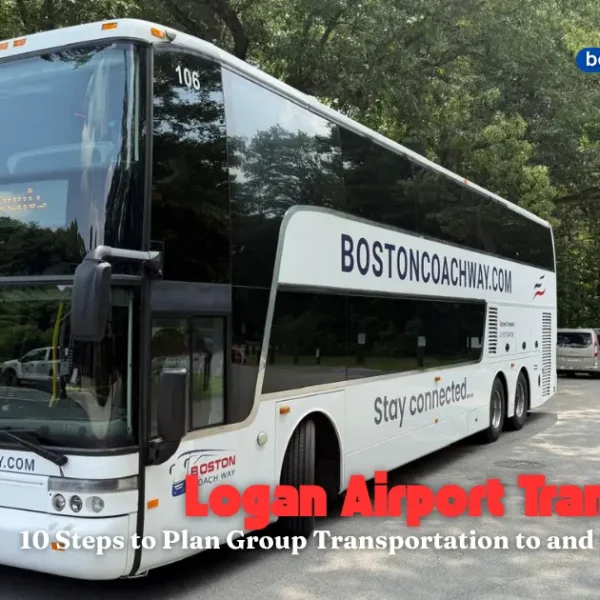
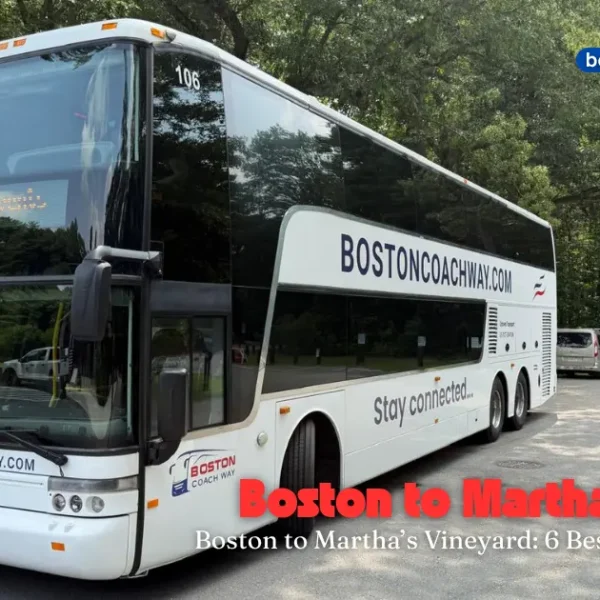
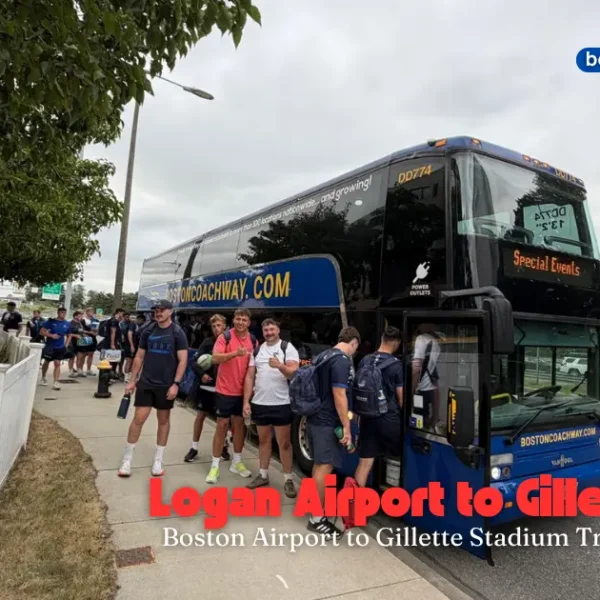
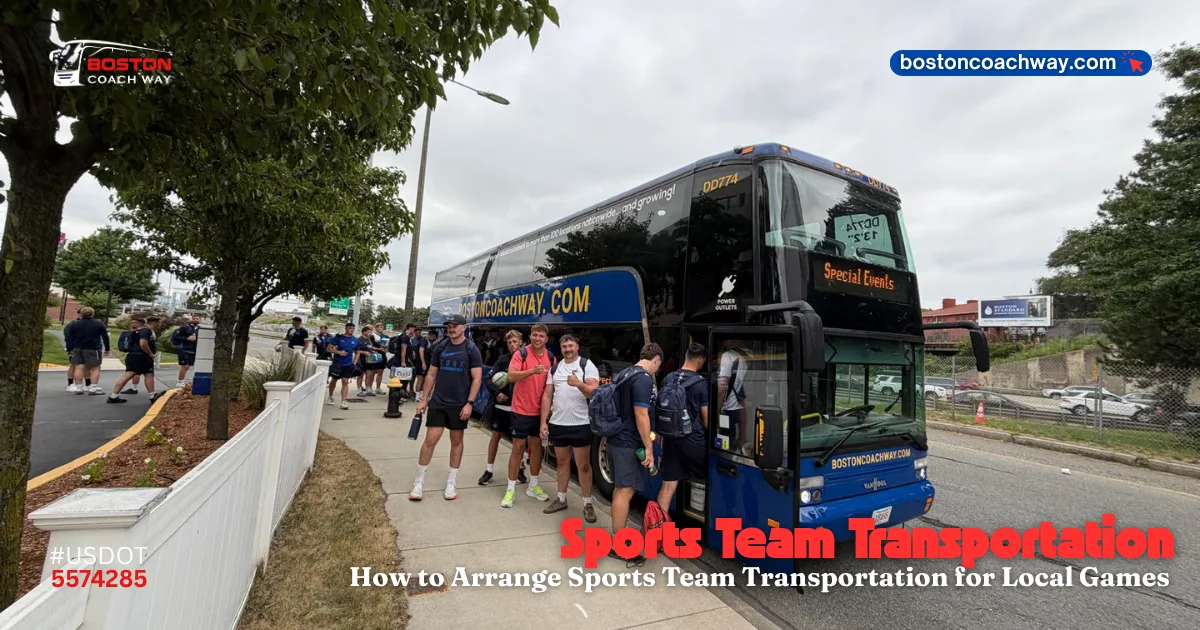
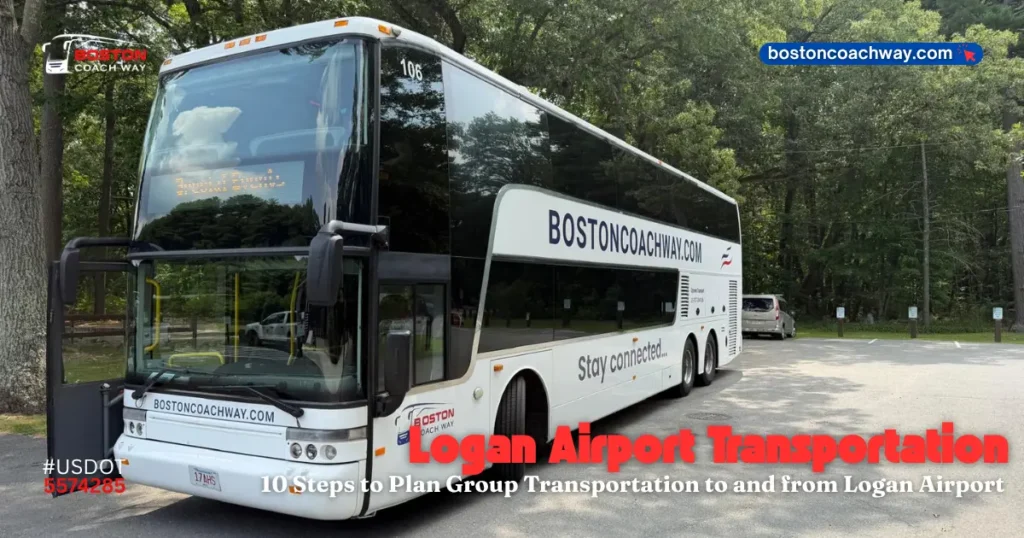
A coach bus is the most suitable option for large groups (30-56 passengers) traveling with substantial luggage or following a shared itinerary. It offers higher passenger capacity, dedicated luggage storage, and onboard amenities such as climate control and Wi-Fi, depending on the vehicle. Corporate groups, sports teams, tour groups, and event attendees can use a coach bus to keep passengers together and simplify airport transfers.
When Should You Book Transportation for Group Travel to Boston Airport?
Book group transportation to Boston Logan Airport at least 2–4 weeks before travel, or earlier during peak travel seasons and major events. Early reservations give you more time to secure the right vehicle, confirm passenger and luggage capacity, and coordinate pickup schedules.
For large groups, coach buses, and trips involving multiple terminals or flight arrivals, booking several weeks ahead helps avoid limited vehicle availability. Before confirming, provide the transportation provider with travel dates, flight details, passenger numbers, luggage requirements, pickup locations, and final destinations. Confirm the reservation and itinerary again before departure to ensure everyone has the correct travel information.

What Are the Common Group Airport Transportation Mistakes to Avoid?
Common group airport transportation mistakes include booking too late, underestimating luggage requirements, choosing an unsuitable vehicle, and failing to coordinate pickup details. For example, an inaccurate passenger count can result in insufficient seating, while overlooking luggage volume can create storage problems. Not allowing enough time for Boston traffic, baggage collection, and boarding can also disrupt airport schedules.
Additionally, unclear meeting-point instructions and poor communication between passengers, the group coordinator, and the driver can cause unnecessary waiting and confusion. Review our guide to common group transportation planning mistakes to understand these issues and learn how to avoid them when organizing group airport transportation.