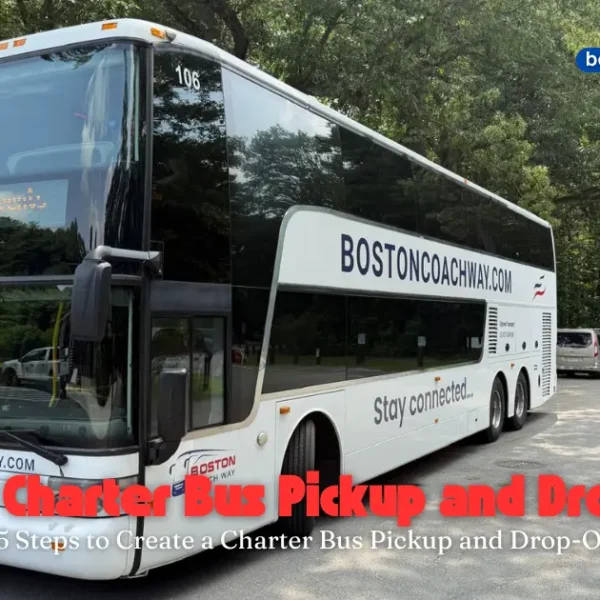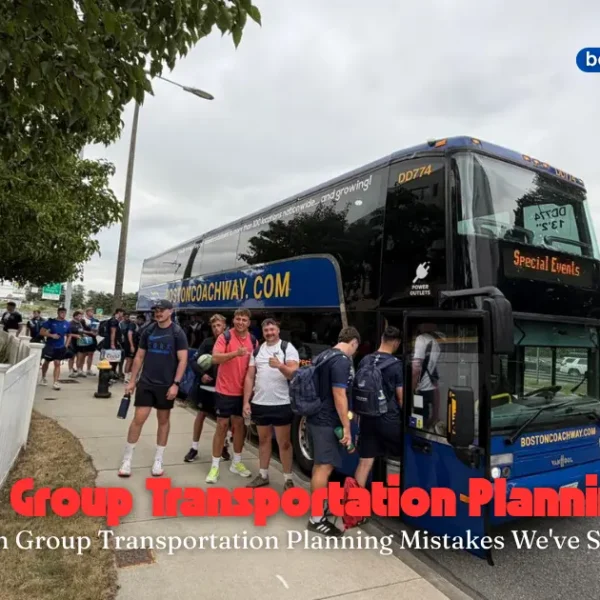
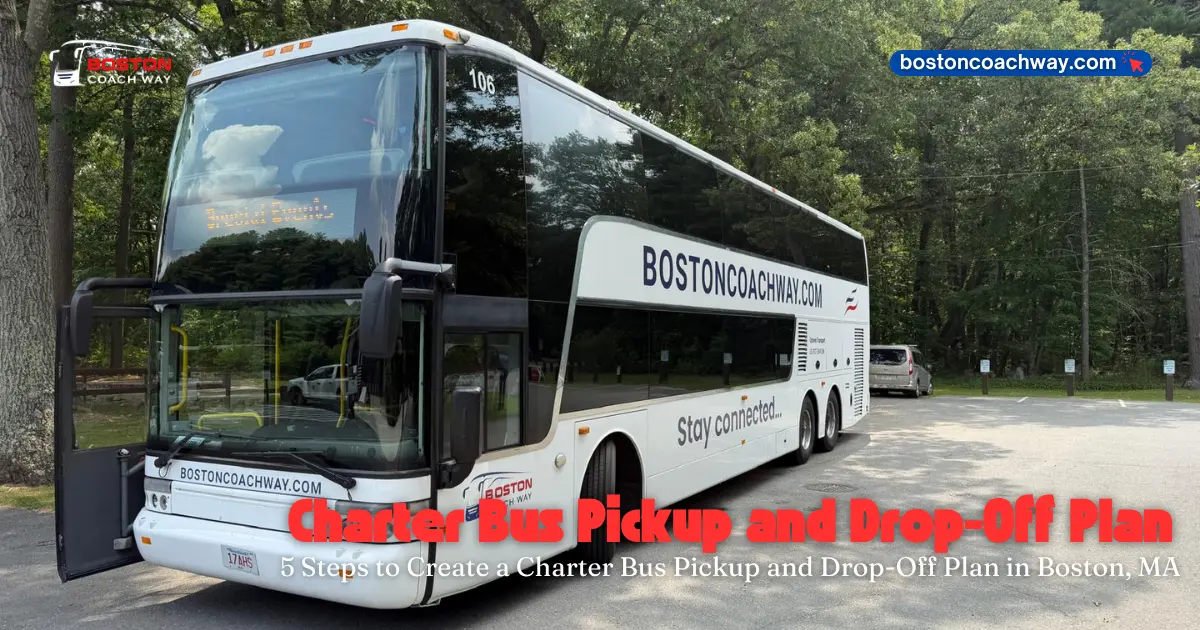







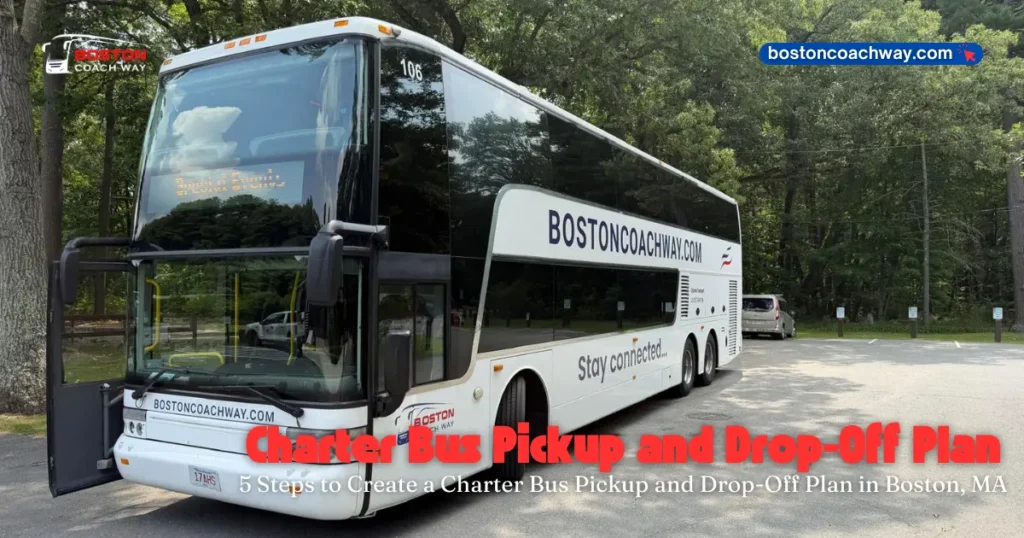
Pickup and drop-off planning in Massachusetts means choosing where, when, and how a charter bus loads and unloads passengers. In Boston, a useful plan goes beyond listing addresses. It identifies the exact bus loading point, checks whether the motorcoach can access each location, reviews route and curb restrictions, and allows time for boarding and traffic.
In this guide, we explain 5 practical steps to create a charter bus pickup and drop-off plan, followed by common planning mistakes, Boston-specific restrictions, and Massachusetts municipal considerations.
Table of Contents
1. List Every Pickup and Drop-Off With an Exact Address
Start the plan by listing every charter bus pickup and drop-off with the exact street address and passenger meeting point. An exact location helps the driver find the right curb, entrance, or loading area instead of relying on a broad area like Downtown Boston.
Record each stop separately, including hotels, campuses, event venues, airports, and other group transportation locations. Include the scheduled time, passenger count, and relevant contact information for each stop.
For multiple pickups, place the locations in their intended travel order. This creates a clear stop sequence and makes travel-time calculations more accurate. It also gives the charter bus operator and venue staff a shared reference for confirming access, loading instructions, and the final pickup and drop-off plan.
2. Verify That Each Location Can Accommodate the Bus
Verify that each pickup and drop-off location can safely accommodate the charter bus before adding it to the final plan. Check the available loading area, curb access, entrance location, turning space, and any restrictions that affect motorcoach access.
A passenger meeting point may not be suitable for a full-size bus. Confirm the location with the property manager, venue, or relevant local authority, and make sure the authority permits the bus to use the location for pickup or drop-off.
Also determine whether the bus can remain there after passengers board or exit. This verification prevents last-minute location changes and gives the driver clear loading instructions. It also creates a more reliable pickup and drop-off plan for hotels, schools, event venues, and other Boston locations.
3. Check the Entire Route for Bus Restrictions
Check the complete route between every pickup and drop-off for restrictions that can affect charter bus access. Reviewing only the addresses can miss narrow streets, one-way roads, low-clearance areas, restricted turns, construction zones, or temporary traffic controls.
In Boston, route conditions can vary between neighborhoods and may affect how a full-size motorcoach reaches a loading location. Check the planned route for each segment, including the roads between multiple pickup points. Confirm restrictions that apply to the specific bus being used, rather than assuming a passenger vehicle route is suitable.
This step helps the driver follow a practical route, reduces unexpected detours, and keeps the pickup and drop-off schedule consistent with the planned group transportation itinerary.
4. Build Extra Time for Boarding, Traffic, and Loading
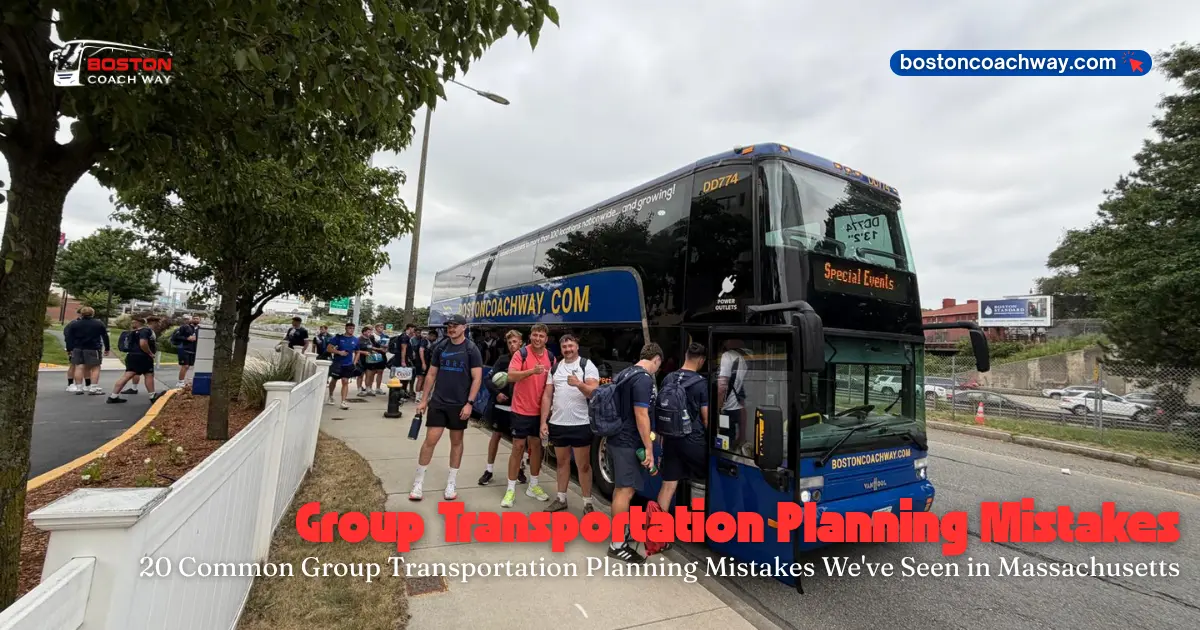
Build extra time into the schedule for passenger boarding, bus loading, traffic, and unexpected delays. A charter bus pickup and drop-off plan needs more than a departure and arrival time because group boarding can take longer than individual passenger loading.
Set a passenger arrival time before the scheduled departure and allow additional time at each pickup location. For multiple stops, include the loading time for each group rather than using one general buffer.
Boston traffic can also affect travel between stops, particularly during busy periods or major events. A realistic time buffer gives the driver enough time to complete each stop without compressing the rest of the itinerary. This creates a more reliable schedule for the entire group transportation plan.
5. Confirm the Plan With Every Venue and the Bus Operator
Build extra time into the schedule for passenger boarding, bus loading, traffic, and unexpected delays. A charter bus pickup and drop-off plan needs more than a departure and arrival time because group boarding can take longer than individual passenger loading.
Set a passenger arrival time before the scheduled departure and allow additional time at each pickup location. For multiple stops, include the loading time for each group rather than using one general buffer.
Boston traffic can also affect travel between stops, particularly during busy periods or major events. A realistic time buffer gives the driver enough time to complete each stop without compressing the rest of the itinerary. This creates a more reliable schedule for the entire group transportation plan.
What Common Mistakes Do People Make When Planning a Pickup & Drop-Off?
There are 8 common mistakes people make when planning a charter bus pickup and drop-off:
- Using a general location instead of an exact pickup address.
- Choosing a passenger meeting point without checking bus access.
- Ignoring curb, loading, or parking restrictions.
- Planning the route without checking road restrictions specific to buses.
- Allowing too little time for passenger boarding and loading.
- Underestimating Boston traffic and travel time between stops.
- Failing to coordinate multiple pickup locations in the correct sequence.
- Not confirming pickup and drop-off instructions with the venue and bus operator.
How Do You Account for Boston Traffic and Curb Restrictions?
Account for Boston traffic and curb restrictions by checking the travel-date conditions and confirming where the charter bus can legally load and unload passengers. Boston has designated Tour Bus Stops for short passenger pickup and drop-off, while Tour Bus Parking locations support longer bus stays. Tour buses cannot use sightseeing trolley stops or stands for passenger loading.
Boston also prohibits vehicle idling for more than 5 minutes. Check temporary road closures, event-related traffic changes, and curb restrictions before finalizing the itinerary. These checks help determine the practical loading location, departure time, and route for each stop, reducing delays and preventing the driver from relying on an unsuitable curb location.
How Do You Handle Multiple Pickup Locations?
Six steps to handle multiple pickup locations.
- List every pickup location separately. Record the exact address, passenger count, meeting point, and scheduled pickup time for each group.
- Arrange the stops in a practical sequence. Order the locations based on the planned route and final destination rather than treating each pickup as an independent trip.
- Check bus access at every stop. Verify that the charter bus can reach each location and identify the correct loading area, curb, or entrance.
- Allow boarding time at each location. Add sufficient time for passengers to arrive, board, and load belongings before the bus continues to the next stop.
- Calculate travel time between stops. Account for distance, Boston traffic, route restrictions, and any expected delays between pickup locations.
- Confirm the sequence with the operator and locations. Share the final stop order, addresses, pickup times, and loading instructions with the charter bus company and relevant venue or property contacts.
How Do Massachusetts and Individual Municipalities Affect the Pickup & Drop-off Plan?
The charter bus pickup and drop-off plan can be affected by several state, municipal, road, and property-level requirements:
- Passenger carrier requirements – Massachusetts Department of Public Utilities (DPU) requirements for passenger carriers operating within the state.
- Municipal traffic rules – Local requirements can control where buses can travel, stop, load, unload, or park.
- Curb restrictions – Designated loading areas, time limits, and restricted curb space can affect passenger pickup and drop-off.
- Bus loading locations – Municipalities may designate specific motorcoach loading or Tour Bus Stops.
- Bus parking and staging – A bus may require a separate location for waiting, layovers, or extended parking after passenger drop-off.
- Road restrictions – Narrow streets, one-way roads, low-clearance areas, restricted turns, construction, and temporary closures can affect the planned route.
- Property and venue rules – Hotels, universities, convention centers, airports, and event venues can establish their own motorcoach access and loading procedures.
- Travel-date restrictions – Special events, road work, traffic advisories, and temporary curb changes can alter an otherwise suitable pickup and drop-off plan.
- Vehicle-specific access – The dimensions and maneuverability of the specific charter bus can determine whether a planned street, entrance, or loading area is practical.
- Local authority permission – The appropriate municipality, property owner, or venue authority may need to permit the planned pickup or drop-off location.

Can Boston Charter Bus Companies Help Create a Pickup and Drop-Off Plan?
Yes, Boston charter bus companies can help create a practical pickup and drop-off plan by reviewing vehicle access, stop locations, routing, and travel timing. Operators can identify suitable loading points, account for the specific bus size, review the stop sequence, and coordinate timing with the planned itinerary.
Their route experience can also help identify access issues that may affect hotels, schools, convention centers, and event venues. The group organizer still confirms venue permissions and local requirements, while the charter bus operator helps align those details with the actual bus and schedule.