


School field trip planning starts with arranging transportation that gets students to their destination safely, comfortably, and on schedule. Choosing the right charter bus for school field trips requires schools to consider the number of students and chaperones, travel distance, accessibility needs, and trip schedule. Schools in Boston and across Massachusetts should also verify the bus company’s safety credentials, compare rental costs, and confirm pickup, drop-off, and parking arrangements before booking.
Whether you are planning a museum visit, a campus tour, or a day trip, this guide explains seven steps to help you choose a charter bus for your field trip. You will also learn the differences between charter buses and traditional school buses, how to evaluate providers, and what to confirm before departure.
Table of Contents
1. Define Field Trip Requirements Before Requesting Quotes
Before requesting charter bus quotes, define the trip’s transportation requirements so providers can recommend suitable vehicles and give accurate estimates. Start by confirming the destination, travel date, departure time, and expected return time. Next, calculate the total number of students, teachers, and chaperones who will travel. Include any wheelchair access or other accessibility needs, luggage, equipment, and planned stops. Check the school’s transportation budget and approval process, too. If the trip involves multiple pickup locations or destinations, include them in the itinerary. Having these details ready makes it easier to compare providers, avoid unsuitable vehicle options, and identify potential scheduling or cost issues before booking.
2. Choose the Right Charter Bus for Students and Chaperones
The right charter bus should accommodate the entire group and meet the trip’s comfort, accessibility, and storage needs. Use these steps to choose a suitable vehicle:
- Confirm passenger capacity: Select a bus with enough seats for every student, teacher, and chaperone.
- Consider travel distance: For longer journeys, ask about reclining seats, climate control, restrooms, and other available amenities.
- Check storage space: Make sure the bus can carry backpacks, sports equipment, musical instruments, or other trip supplies.
- Confirm accessibility: Discuss wheelchair access and any required boarding or seating arrangements before booking.
- Match the vehicle to the itinerary: Consider road access, parking restrictions, and the number of stops.
Ask the operator to confirm the vehicle type and available features rather than relying on a general fleet description.
3. Verify the Charter Bus Company's Safety Record and Credentials
Checking a charter bus company’s safety record and credentials helps schools assess whether a provider is suitable for transporting students. Before booking, follow these steps:
- Confirm the company’s identity: Request its legal business name and USDOT number, if applicable.
- Check official records: Use the FMCSA’s bus safety search to review available safety information, operating authority, and insurance details for applicable interstate carriers.
- Ask about drivers: Confirm licensing, qualifications, and experience relevant to the planned trip.
- Discuss vehicle maintenance: Ask how the company maintains its buses and handles reported mechanical problems.
- Request documentation: Verify applicable insurance coverage and any required operating credentials.
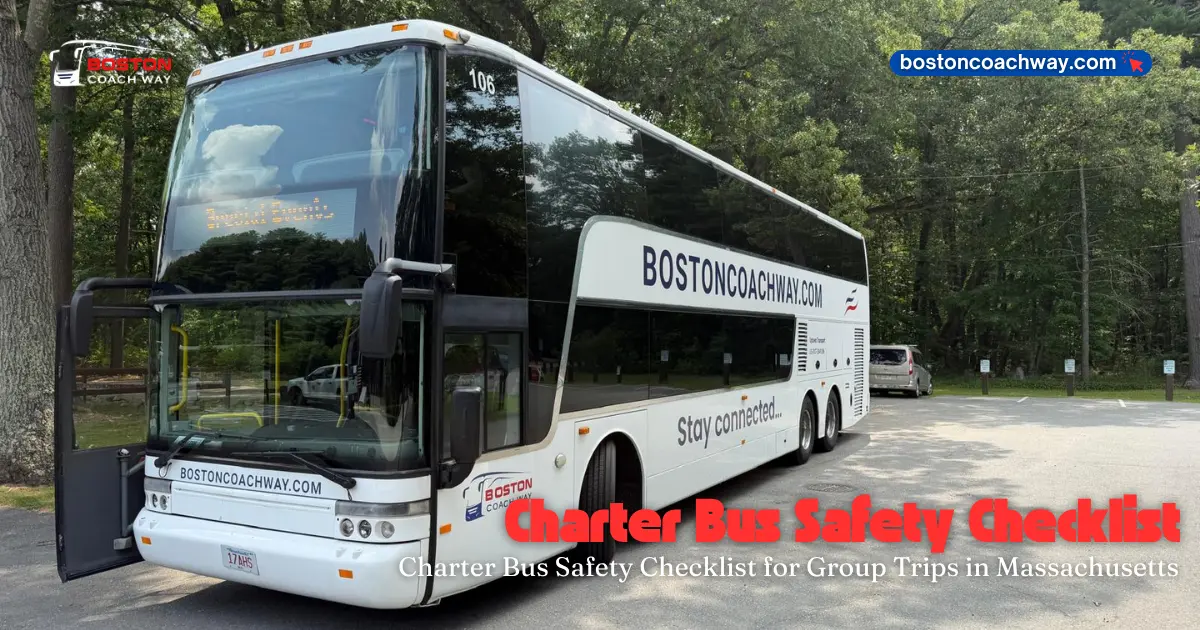
Use this charter bus safety checklist to organize your review. Check the requirements that apply to your specific trip rather than relying on a single rating or claim.
4. Confirm Pickup, Drop-Off, Route, and Parking Logistics
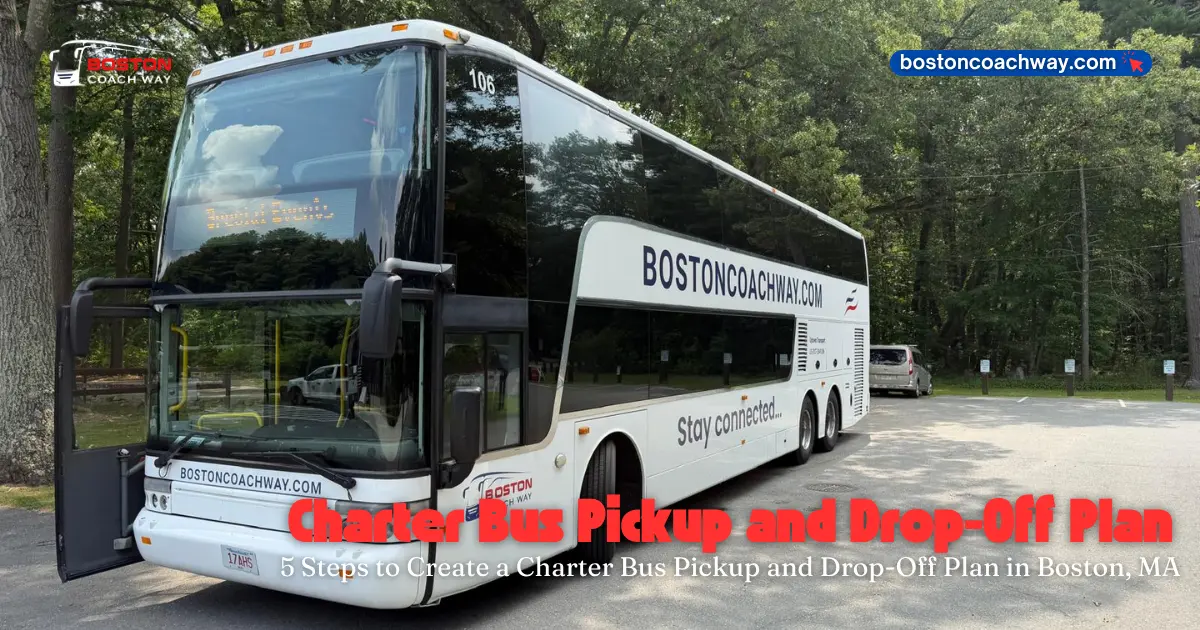
Clear pickup and drop-off arrangements help prevent delays, confusion, and unsafe boarding situations on field trip day. Start by choosing a designated pickup point with enough space for students to gather and board safely. Confirm that the bus can access the location and that parking or stopping is permitted. Next, check the destination’s bus access rules, designated unloading areas, parking arrangements, and any reservation requirements. Allow time for traffic, student boarding, and movement between stops, especially when traveling around Boston. Share the agreed itinerary and contact details with the school and transportation provider. This charter bus pickup and drop-off plan can help you organize these details before departure.
5. Compare Charter Bus Quotes and the Total Trip Cost
Comparing charter bus quotes helps schools understand the full cost of transportation rather than choosing a provider based only on the initial price. Request written estimates using the same passenger count, itinerary, dates, and schedule. Then check each quote for:
- Base rate: Determine whether pricing is hourly, daily, mileage-based, or a combination.
- Minimum booking time: Ask whether a minimum number of hours applies.
- Additional charges: Confirm whether tolls, parking, driver expenses, taxes, or other fees are included.
- Schedule changes: Ask how extra waiting time, route changes, or delays affect the price.
- Payment and cancellation terms: Check deposits, payment deadlines, and potential cancellation fees.
The charter bus rental cost guide provides further details about factors that influence pricing. Compare the total quoted cost and included services before making a decision.
6. Review the Contract and Ask About Contingency Plans
Reviewing the contract before signing helps schools understand exactly what the transportation provider has agreed to deliver. Check that the document includes the trip date, itinerary, vehicle type, passenger capacity, total price, payment schedule, and cancellation terms. Confirm which company will operate the trip and whether any substitutions are permitted. Before booking, ask what happens if the bus breaks down, the driver is unavailable, severe weather disrupts travel, or the school needs to change the schedule. Create a simple contingency plan by identifying the provider’s emergency contact, the school’s trip coordinator, an alternative communication method, and the process for reporting delays. Make sure staff know whom to contact and how families will receive important updates if plans change.
7. Finalize the Booking and Confirm Every Detail in Writing
Once you have selected a transportation provider, finalize the reservation in writing to reduce the risk of misunderstandings. Review the confirmation and make sure it lists the travel date, pickup and drop-off addresses, departure and return times, passenger count, vehicle type, agreed price, and any accessibility requirements. Save the signed contract, payment records, and the provider’s contact information in a place accessible to the trip coordinator. Before the field trip, reconfirm the itinerary and ask who will contact the school if the driver, vehicle, or schedule changes. Share the final details with teachers and chaperones so everyone understands the plan.
Why Does Choosing the Right Charter Bus Matter for School Field Trips?
Choosing the right charter bus helps schools transport students safely, keep the trip organized, and manage transportation costs. The vehicle and operator you select can affect several parts of the field trip experience.
Student safety: Schools need a provider with appropriate credentials, qualified drivers, well-maintained vehicles, and suitable insurance coverage. Checking these details before booking helps administrators make an informed decision.
Passenger capacity and comfort: The bus must have enough seats for every student, teacher, and chaperone. Suitable seating, climate control, and adequate storage can make the journey more comfortable, particularly when traveling longer distances.
Accessibility and individual needs: Some students may require wheelchair access, accessible boarding, or specific seating arrangements. Confirming these requirements in advance helps the school choose a vehicle that accommodates the group.
Scheduling and logistics: A field trip often follows a fixed schedule for departure, admission, activities, and return. Choosing a transportation provider that can accommodate the itinerary and coordinating pickup, drop-off, and parking arrangements helps reduce avoidable delays.
Budget management: Charter bus rental costs vary depending on factors such as travel distance, trip duration, vehicle type, and additional charges. Comparing written quotes helps schools understand the total cost before committing to a booking.
Communication and contingency planning: Unexpected traffic, mechanical problems, or schedule changes can disrupt a trip. Knowing whom to contact and how the provider handles these situations helps teachers respond more effectively.
By considering these factors together, schools in Boston and across Massachusetts can select transportation that fits their students’ needs, trip requirements, and budget.
What Is the Difference Between a Charter Bus and a School Bus?
A charter bus and a school bus can both transport students on field trips, but they differ in design, amenities, and booking arrangements. The best option depends on the group size, travel distance, accessibility needs, and trip itinerary.
Factors | Charter bus | Traditional school bus |
Typical use | Field trips, campus tours, competitions, and longer-distance group travel | Daily school routes and many local field trips |
Booking | Usually reserved through a transportation company for a specific itinerary | Often arranged through the school district or its contracted transportation provider |
Seating and comfort | May offer reclining seats, more legroom, and climate control | Typically has forward-facing bench seats with a simpler interior |
Onboard amenities | Some vehicles include restrooms, Wi-Fi, power outlets, and overhead storage | Usually has fewer passenger amenities |
Luggage and equipment | Many motorcoaches have undercarriage storage for luggage and bulky equipment | Storage capacity varies and may be more limited |
Accessibility | Accessible vehicles may be available by request; confirm features before booking | Accessibility features depend on the vehicle assigned |
Cost | Often priced according to factors such as trip duration, distance, and vehicle type | Costs depend on district arrangements, provider rates, and trip requirements |
Best suited for | Longer journeys, large groups, and trips requiring additional amenities or storage | Local school travel and trips that fit the available vehicle and school transportation arrangements |
Which should your school choose? A traditional school bus may suit a short local trip with straightforward transportation needs. A charter bus may be a better fit for longer journeys, substantial luggage, or additional onboard amenities. Compare the actual vehicles, accessibility features, schedule, and total cost before deciding, because specifications and services vary by provider.
What Accessibility Features Should Schools Confirm?
Schools should confirm that the charter bus can accommodate every student’s accessibility needs before booking. Not every bus has the same features, so discuss individual requirements with the transportation provider in advance.
- Wheelchair lift or ramp: Ask whether the vehicle provides accessible boarding for students who use wheelchairs or have difficulty climbing steps.
- Wheelchair securement systems: Confirm that the bus has appropriate securement equipment and occupant restraints for students traveling in wheelchairs.
- Accessible seating: Check whether seating arrangements can accommodate students with mobility needs and allow them to travel comfortably with their group.
- Step-free access and handrails: Ask about features that help students with limited mobility enter and exit the vehicle safely.
- Assistance and boarding time: Discuss any support students may need when boarding, exiting, or moving between pickup locations and the destination.
- Accessible pickup and drop-off locations: Make sure boarding areas have suitable access and enough space for students to enter and leave the bus safely.
Schools should share their requirements when requesting quotes and ask the charter bus provider to confirm the exact vehicle and available features in writing. The Americans with Disabilities Act (ADA) provides information about disability access requirements. Confirm which requirements apply to the specific vehicle and trip rather than assuming every charter bus offers the same accessibility features.
When Should Schools Book a Charter Bus for a Field Trip?
Schools should book a charter bus as early as possible once the trip date, destination, and approximate passenger count are confirmed. Booking a charter bus for field trips ahead gives schools more time to compare providers, check safety credentials, arrange accessibility features, and coordinate pickup and drop-off locations. It can be especially helpful during busy field trip seasons, when many schools may need transportation around the same dates. There is no single booking deadline for every trip, so contact providers early and confirm their availability before finalizing the itinerary.

What Should Teachers Confirm on the Day of the Field Trip?
Teachers should complete a final transportation check before students board the charter bus. Use this checklist to keep the school field trip organized and ensure everyone understands the travel arrangements.
- Confirm the bus and driver: Check that the assigned vehicle and driver match the booking details. Ask the transportation provider about any unexpected changes.
- Check passenger capacity: Make sure there are enough seats for all students, teachers, and chaperones.
- Take attendance: Count students before boarding and confirm that everyone is present.
- Review accessibility needs: Verify that any required boarding equipment, seating arrangements, and assistance are available.
- Confirm the itinerary: Review departure times, destinations, planned stops, return arrangements, and any special instructions with the driver.
- Share emergency contacts: Ensure the trip coordinator and relevant staff have the transportation provider’s contact information.
- Explain boarding expectations: Tell students where to gather, how to board safely, and which teacher or chaperone to follow.
- Keep communication open: Agree on how the driver and school staff will communicate about delays, route changes, or other problems.
- Recount students at each stage: Check attendance after boarding, before leaving the destination, and upon returning to school.
Completing these checks helps teachers identify missing information before departure and respond more effectively if plans change during the trip.