




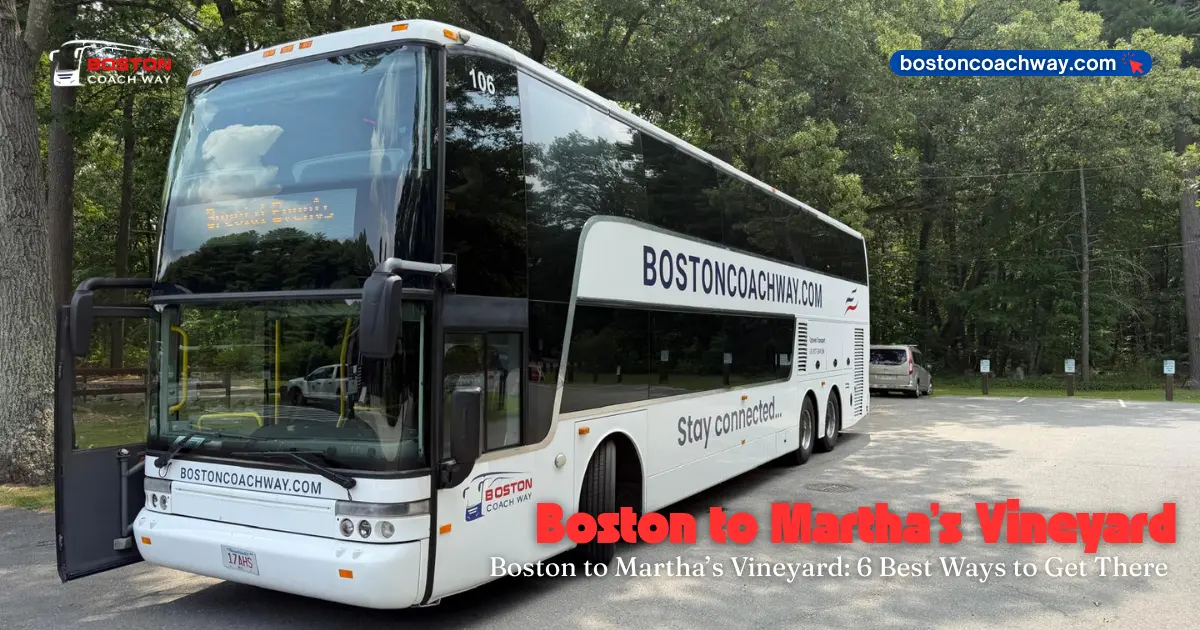


A charter bus is a dedicated group transportation option that moves passengers together according to a planned itinerary, while rideshare provides individual vehicle trips requested through a digital platform. Planning group transportation in Boston, Massachusetts, involves more than choosing a vehicle. Passenger capacity, group size, vehicle count, pickup schedules, luggage, multiple stops, accessibility, and total trip cost can all affect convenience.
This guide compares charter buses and rideshare services across these factors, helping planners evaluate transportation for weddings, corporate events, school trips, sports teams, conferences, and other group travel.
Table of Contents
What Is the Difference Between a Charter Bus and Rideshare?
The difference between a charter bus and rideshare becomes more significant as group size, luggage, shared destinations, and scheduled stops increase. A charter bus centralizes transportation around one vehicle, while rideshare may require multiple vehicles for the same group. The following table summarizes the primary differences.
Attribute | Charter Bus | Rideshare |
Group size | Designed for organized groups, with vehicle capacity varying by bus type. | Designed for smaller passenger groups per vehicle. |
Convenience | Centralizes passengers, scheduling, and transportation coordination. | Provides individual ride flexibility. |
Booking | One group transportation reservation. | Separate ride requests may be required for larger groups. |
Luggage | Larger vehicles can provide dedicated luggage storage. | Storage depends on the selected vehicle and available cargo space. |
Pricing | Usually based on vehicle type, rental duration, route, mileage, and trip requirements. | Usually based on individual trip distance, time, vehicle type, demand, and applicable fees. |
Group coordination | One driver and vehicle simplify shared transportation. | Multiple vehicles create additional pickup and communication requirements. |
Flexibility | High for a shared group itinerary. | High for passengers traveling independently. |
Typical use | Weddings, corporate events, school trips, sports teams, conferences, and large-group travel. | Short trips, smaller groups, and passengers with separate destinations. |
The key distinction is centralized versus individual transportation. A charter bus treats the group as one transportation unit. Rideshare treats passengers as separate ride requests, which can require more vehicles and coordination as the group grows. This difference directly affects how planners evaluate convenience, capacity, luggage, scheduling, and total transportation cost.
What Is a Charter Bus?
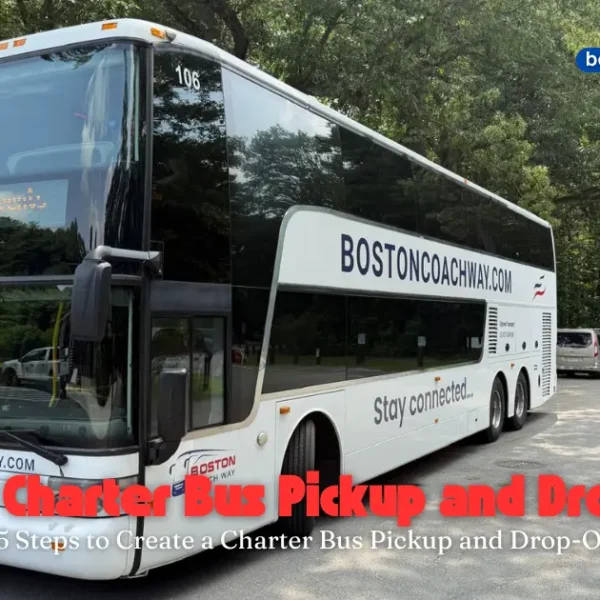
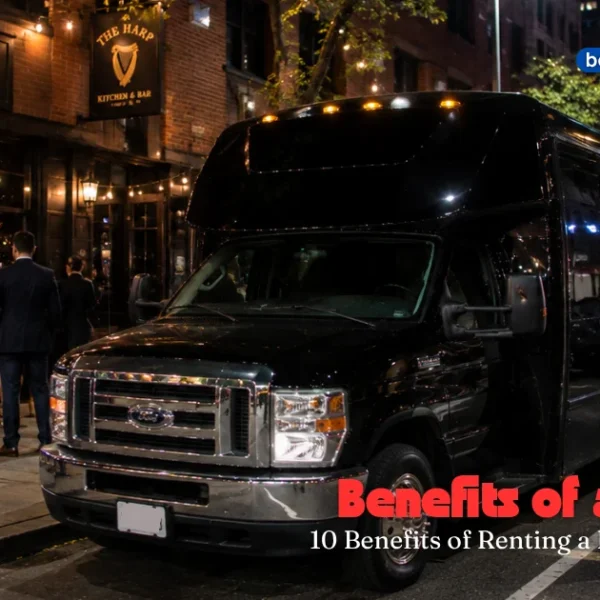
A charter bus is a privately rented passenger vehicle with a professional driver that transports a group according to a planned itinerary. Charter buses are available in different sizes, including minibuses and full-size motorcoaches, allowing planners to match vehicle capacity with passenger numbers. A charter rental can include scheduled pickups, destinations, waiting periods, and multiple stops. The vehicle, route, rental duration, luggage requirements, accessibility needs, and trip schedule determine which charter bus configuration fits the group transportation plan.
What Are the Benefits of a Charter Bus?
There are 5 common benefits of a charter bus for group transportation:
- Centralized travel: A charter bus keeps passengers together in one vehicle, reducing the need to divide a group among multiple vehicles.
- Planned scheduling: A charter bus operates according to the group’s planned departure times, destinations, and itinerary.
- Simplified coordination: One vehicle and driver reduce the number of pickups, driver communications, and arrival times that an organizer must manage.
- Luggage capacity: Many charter buses provide dedicated storage areas for suitcases, event equipment, sports gear, and other group belongings.
- Group itinerary support: A charter bus can accommodate planned stops and shared destinations, making it suitable for weddings, conferences, school trips, sports teams, and other organized group travel.
What Are the Problems With Renting a Charter Bus?
There are 5 potential problems with renting a charter bus:
- Higher upfront cost: A charter bus rental can require a larger initial payment than individual transportation for a small group or short trip.
- Minimum rental requirements: Some charter bus rentals require minimum rental periods, which can increase the total cost for short itineraries.
- Advance planning: Charter buses generally require advance booking to secure the appropriate vehicle, driver, pickup schedule, and itinerary.
- Limited availability: Vehicle availability can become constrained during peak travel periods, major events, weekends, and holidays.
- Fixed vehicle capacity: A selected charter bus has a defined passenger capacity, so the vehicle must be matched to the group’s size and transportation requirements.
Is a Charter Bus Safe for Groups?
Yes, a charter bus can provide safe group transportation when the vehicle, driver, and operator meet applicable safety requirements. Safety depends on factors such as vehicle maintenance, driver qualifications, passenger capacity, and operating practices. The National Transportation Safety Board recommends selecting buses equipped with lap/shoulder belts and providing passengers with pre-trip safety briefings. Safety also requires following occupancy limits and using appropriate passenger restraints where available.
How Many People Can a Charter Bus Accommodate?
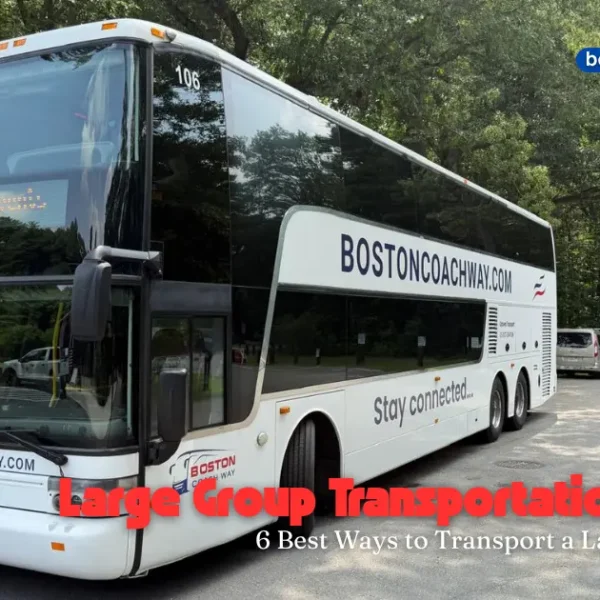
A charter bus can accommodate approximately 10 to 81 passengers, depending on the vehicle type and configuration. Minibuses generally serve smaller groups, while full-size motorcoaches and double-decker coaches provide higher passenger capacity for large group transportation. The appropriate vehicle depends on the group’s passenger count, luggage requirements, accessibility needs, and itinerary. For example, a 56-passenger motorcoach can transport up to 56 passengers in one vehicle when operated within its rated capacity.
How Much Does a Charter Bus Rental Cost?
A charter bus rental typically costs $120–$300 per hour, with minimum rental fares ranging from $480 to $1,800. Exact charter bus pricing depends on the vehicle type, trip duration, travel distance, passenger count, travel season, pickup location, route complexity, and amenities.
What Is Rideshare?
Rideshare is an on-demand transportation service that connects passengers with drivers through a digital platform, allowing users to request individual trips between specified pickup and drop-off locations. Rideshare vehicles typically serve a small number of passengers per trip and operate according to individual ride requests rather than a shared group itinerary. Pricing can vary based on trip distance, travel time, vehicle type, demand, availability, and applicable fees. This model provides flexible point-to-point transportation for individual travelers and smaller groups.
What Are the Benefits of Rideshare?
There are 5 common benefits of rideshare:
- On-demand availability: Passengers can request transportation when they need it without arranging a dedicated vehicle in advance.
- Point-to-point service: Rideshare provides direct transportation between specified pickup and drop-off locations.
- Flexible scheduling: Passengers can request trips at different times based on individual travel needs.
- Multiple vehicle options: Different vehicle categories can accommodate varying passenger and luggage requirements.
- Digital booking: Passengers can request rides, enter trip details, and receive booking information through a mobile platform quickly
What Are the Problems With Booking Rideshare for Groups?
There are 5 common problems with booking rideshare for groups:
- Multiple vehicles: Larger groups may need several rideshare vehicles when one vehicle cannot accommodate everyone.
- Pickup coordination: Coordinating multiple vehicles can create different pickup times, locations, and arrival times.
- Limited luggage space: Individual rideshare vehicles may have limited cargo capacity for suitcases, equipment, or event supplies.
- Separate trip management: Each vehicle may require separate booking, communication, and coordination throughout the journey.
- Variable pricing: Trip costs can change based on distance, travel time, vehicle availability, demand, and additional fees.
Is Rideshare Safe for Groups?
Yes, rideshare can provide safe transportation for groups when passengers use properly regulated services and follow applicable safety requirements. Safety measures can include driver screening, vehicle requirements, insurance, and occupant-restraint rules, although requirements vary by jurisdiction. The National Highway Traffic Safety Administration highlights the importance of seat belts and child restraints in rideshare vehicles. For groups with children, passengers should verify appropriate restraint requirements before booking.
How Many People Can a Rideshare Vehicle Accommodate?
A rideshare vehicle typically accommodates up to 6 passengers, depending on the vehicle category and platform requirements. Standard rideshare vehicles generally have lower passenger capacity than charter buses, making larger groups dependent on multiple vehicles. For example, a 24-person group would require at least 4 vehicles if each vehicle accommodates 6 passengers. Actual availability may vary, and luggage, child restraints, and vehicle configuration can reduce the practical passenger capacity.
How Much Does a Rideshare Booking Cost?
Rideshare booking costs vary significantly based on your location, the distance of the trip, time of day, and the type of vehicle you choose. Most major rideshare platforms use a dynamic pricing model rather than a flat rate.
Charter Bus vs. Rideshare: Detailed Comparison
A charter bus and rideshare differ mainly in how they handle group capacity, scheduling, coordination, pricing, luggage, and shared travel. A charter bus is organized around one group itinerary and a dedicated vehicle, while rideshare is organized around individual vehicle trips. The table below compares the attributes that most directly affect convenience for group transportation.
Feature | Charter Bus | Rideshare |
Group Size | Designed for organized groups, with vehicles ranging from minibuses to full-size motorcoaches or double-decker buses. | Better suited to smaller passenger groups per vehicle; larger groups may require multiple vehicles. |
Capacity | Approximately 10–81 passengers, depending on vehicle type and configuration. | Typically up to 6 passengers per vehicle, depending on vehicle category and configuration. |
Booking | One reservation can cover the group’s vehicle, driver, route, schedule, and itinerary. | Larger groups may require multiple vehicle requests and separate trip arrangements. |
Schedule | Transportation is planned around predetermined pickup times, destinations, waiting periods, and stops. | Each ride is requested according to individual pickup and drop-off needs. |
Group Coordination | One vehicle and driver centralize passenger movement and reduce coordination between vehicles. | Multiple vehicles can create additional pickup, communication, and arrival-time coordination. |
Pricing | Usually based on vehicle type, rental duration, mileage, route, date, passenger requirements, and itinerary. Charter bus pricing commonly ranges from $120–$300 per hour, with minimum rental fares of $480–$1,800. | Usually based on individual trip distance, time, vehicle type, demand, availability, and applicable fees. |
Luggage | Larger charter buses can provide dedicated luggage storage for suitcases, equipment, sports gear, and event supplies. | Luggage capacity depends on the vehicle and available cargo space. |
Multiple Stops | Supports planned multi-stop itineraries, including scheduled pickups, venues, hotels, airports, and return trips. | Additional stops can affect trip duration and fare, while coordinating stops across multiple vehicles can add complexity. |
Environmental Impact | One bus can transport many passengers in a single vehicle, reducing the number of separate vehicle trips required for the same group. | Larger groups may require several vehicles, increasing the number of individual vehicle trips. |
Minimum Rental Time | Charter rentals may have minimum rental periods, which can affect short-trip costs. | Generally requested for individual trips rather than a fixed vehicle rental period. |
Flexibility | High for groups with a defined itinerary, scheduled stops, and shared destinations. | High for individual passengers who need different pickup times, destinations, or trip durations. |
Best Use Cases | Weddings, corporate events, conferences, school trips, sports teams, airport group transportation, sightseeing, and organized group travel. | Short point-to-point trips, smaller groups, individual travel, and passengers with separate destinations. |
Hidden Cost | Potential additional costs can include extended rental time, additional mileage, parking, tolls, driver requirements, or itinerary changes, depending on the rental agreement. | Potential additional costs can include variable fares, demand-based pricing, additional stops, waiting time, tolls, and multiple vehicles for larger groups. |
Accessibility | Vehicle availability can include accessibility features such as wheelchair-accessible configurations, but requirements should be confirmed when booking. | Accessibility depends on vehicle availability and the requested service category in the travel area. |
The comparison shows that convenience depends on the structure of the trip rather than passenger count alone.
How Does Group Size Affect Charter Bus vs. Rideshare Convenience?
Group size directly affects vehicle count, passenger coordination, luggage capacity, scheduling, and total transportation cost. A charter bus can keep a larger group together in one vehicle when capacity matches the passenger count. Rideshare may require multiple vehicles as the group grows. For Large group transportation, the main points affected by group size include:
- Vehicle count: Larger groups can increase the number of rideshare vehicles required.
- Passenger coordination: Multiple vehicles create more pickup, departure, and arrival points to coordinate.
- Luggage capacity: More passengers generally mean more luggage and equipment to accommodate.
- Scheduling: Keeping a large group on the same departure and arrival schedule becomes more complex when passengers are divided among vehicles.
- Total cost: Multiple rideshare trips can increase the combined transportation cost.
- Itinerary management: Shared stops and return trips require greater coordination when a group is divided across vehicles.
- Vehicle selection: Charter bus size should match passenger count, luggage requirements, accessibility needs, and planned itinerary.
- Group cohesion: A single charter bus can keep passengers travelling together rather than separating the group among several vehicles.
How Does Group Coordination Differ Between a Charter Bus and Rideshare?
A charter bus centralizes group coordination through one vehicle, driver, schedule, and itinerary, while rideshare can require separate vehicles and trip arrangements for larger groups. The main coordination differences include:
- Pickup coordination: A charter bus can collect the group at an agreed location. Rideshare may require multiple vehicles and separate pickup arrangements.
- Departure timing: A charter bus allows the group to follow one planned departure time. Multiple rideshare vehicles can arrive at different times.
- Driver communication: A charter bus gives the organizer one primary driver for communication. Multiple rideshare vehicles can require separate communication.
- Destination management: A charter bus follows the group’s planned destinations and stops. Rideshare trips are generally managed as individual journeys.
- Passenger tracking: One vehicle makes it easier to keep the group together. Multiple vehicles require organizers to coordinate passengers across vehicles.
- Return transportation: A charter bus can remain part of the itinerary for scheduled return transportation. Rideshare requires passengers to arrange return trips individually.
- Itinerary changes: A charter bus itinerary can be managed as one group transportation plan. Changes affecting multiple rideshare vehicles require coordination across separate trips.
- Luggage management: One vehicle consolidates group luggage and equipment. Multiple rideshare vehicles divide belongings across available cargo spaces.
Which Is Better for Multiple Stops and Group Itineraries?
A charter bus is generally more suitable for multiple stops and planned group itineraries because one vehicle can follow a shared schedule, route, and sequence of destinations. A charter bus can accommodate scheduled pickups, event venues, hotels, airports, and return trips within one itinerary. Rideshare can also make multiple stops, but larger groups may require several vehicles, making synchronized pickups, arrivals, luggage, and schedule changes more difficult to coordinate.
How Do You Choose Between a Charter Bus and Rideshare?
Choose between a charter bus and rideshare by evaluating group size, itinerary, number of stops, luggage, scheduling, accessibility, vehicle requirements, and total transportation cost. Use these eight steps:
- Calculate the group size: Determine the total number of passengers and whether one vehicle can accommodate everyone.
- Map the itinerary: List pickup locations, destinations, scheduled stops, waiting periods, and return transportation.
- Assess coordination needs: Choose a transportation model that matches the level of group coordination required.
- Check luggage requirements: Consider suitcases, event equipment, sports gear, and other cargo.
- Compare total costs: Account for vehicle count, rental duration, mileage, fares, fees, parking, tolls, and other trip requirements.
- Check accessibility needs: Confirm whether passengers require wheelchair access, additional space, or specific vehicle features.
- Match the transportation model to the trip: A charter bus fits planned group itineraries, while rideshare fits smaller or individually scheduled trips.
- Confirm availability: Verify that the required vehicle type and schedule are available for the travel date.
For planners who need to plan wedding transportation, group size, ceremony and reception locations, guest pickup points, luggage, and return schedules should be evaluated together before selecting the transportation method.

What Should You Consider Before Choosing?
Consider group size, vehicle capacity, itinerary, scheduling, luggage, accessibility, total cost, number of stops, and coordination requirements before choosing a charter bus or rideshare. Use these factors to evaluate the transportation model:
- Group size: Determine the total number of passengers and whether one vehicle can accommodate the group.
- Vehicle capacity: Match passenger capacity with luggage, equipment, and space requirements.
- Trip itinerary: Consider pickup locations, destinations, scheduled stops, waiting periods, and return transportation.
- Scheduling: Determine whether the group needs one coordinated departure and arrival schedule.
- Luggage: Estimate the amount and type of luggage, equipment, or event materials passengers will carry.
- Accessibility: Identify wheelchair access, mobility requirements, and other passenger-specific transportation needs.
- Total cost: Compare rental rates or individual fares along with mileage, trip duration, fees, parking, tolls, and additional vehicles.
- Multiple stops: Evaluate whether the transportation needs to follow a planned sequence of destinations.
- Coordination: Consider how many drivers, vehicles, bookings, pickup points, and passenger groups an organizer must manage.
- Trip type: Match the transportation method to the event, such as a wedding, corporate event, school trip, sports event, conference, or short point-to-point journey.
- Booking requirements: Check vehicle availability, advance booking needs, minimum rental periods, and applicable service conditions.
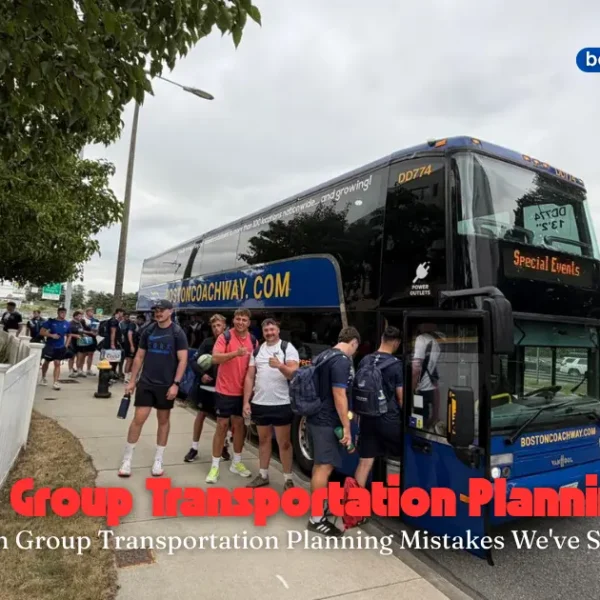
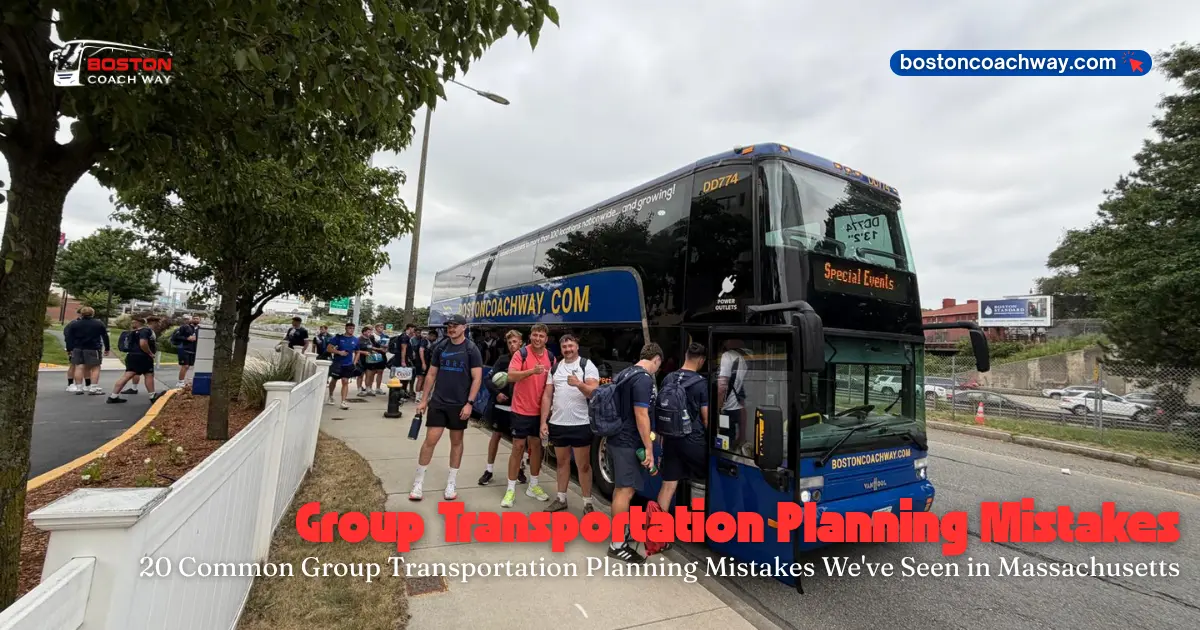
A Charter bus rental guide can help planners evaluate vehicle types, capacity, pricing, and rental requirements before booking. Reviewing common Group transportation mistakes can also help identify avoidable issues involving scheduling, vehicle capacity, passenger coordination, and itinerary planning.