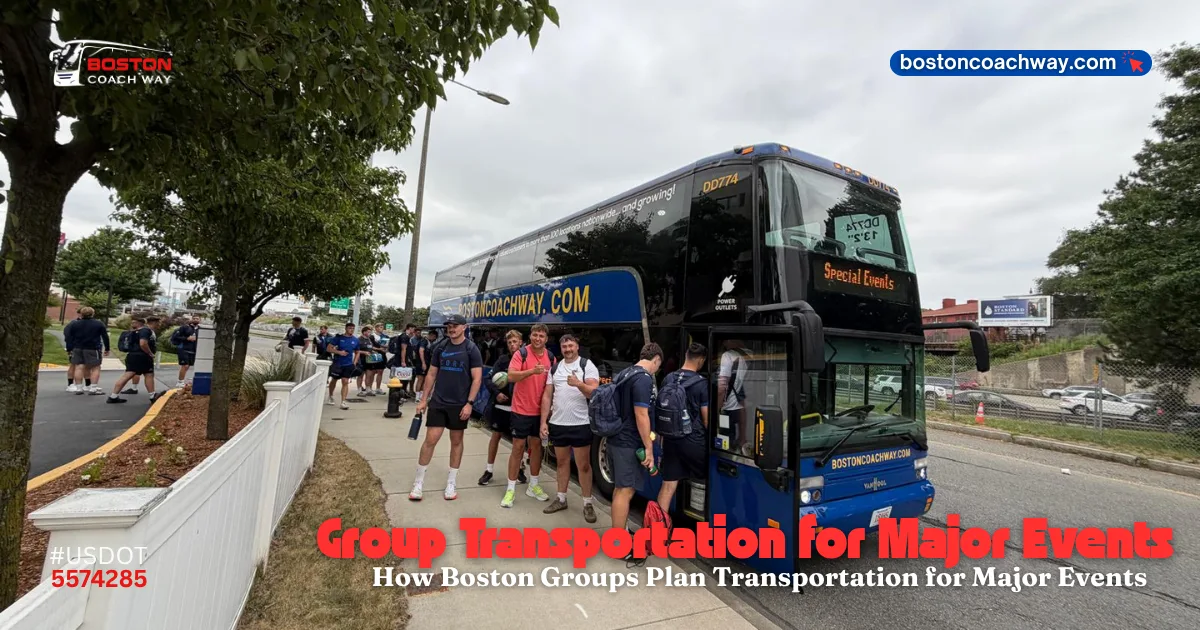

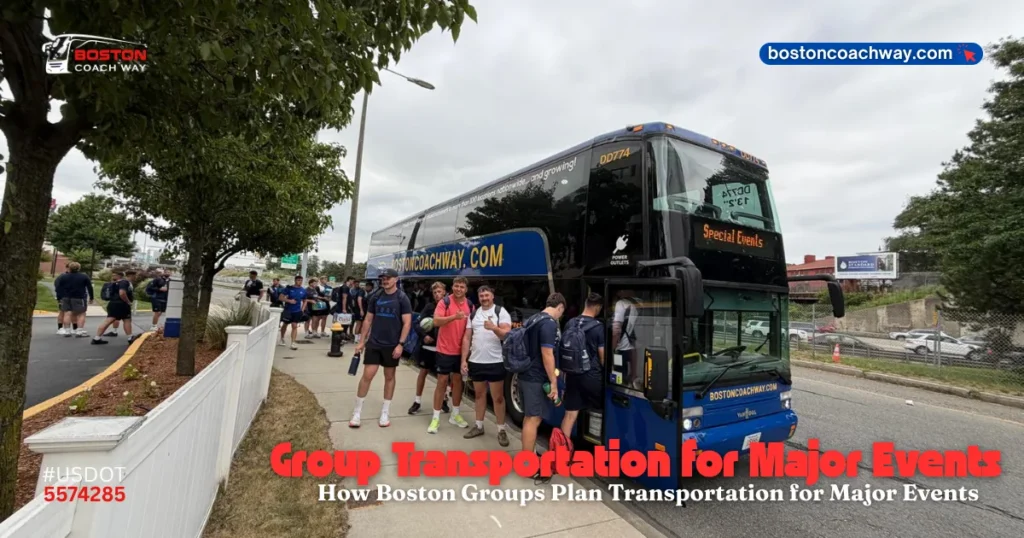
Groups in Boston plan transportation for major events, concerts, conventions, sporting events, and large gatherings by organizing passenger locations, selecting suitable vehicles, coordinating pickup schedules, and managing venue access. Whether arranging transportation for the Boston Marathon, Boston Calling, or a corporate convention, organizers must account for attendee numbers, Boston traffic, parking restrictions, and travel distances.
This guide explains five practical planning steps, common transportation mistakes to avoid, vehicle selection, rental costs, and booking timelines to help first-time and experienced organizers coordinate group transportation and prevent event-day delays.
Table of Contents
Why Does Transportation Planning Matter for Major Events in Boston?
Transportation planning matters for major events in Boston because it coordinates attendee arrivals, reduces parking pressure, prevents travel delays, and keeps event schedules on track. Concerts at TD Garden, baseball games at Fenway Park, and conventions at the Boston Convention and Exhibition Center attract passengers from different hotels, airports, and surrounding communities.
Without organized transportation, groups can experience missed pickups, traffic-related delays, and insufficient parking. A coordinated plan also helps organizers manage vehicle capacity, accessible transportation, and return trips, improving the overall event experience for attendees and staff.
What Should Organizers Consider Before Planning Event Transportation?
Organizers should evaluate six essential factors: expected attendance, event location, passenger origins, arrival schedules, accessibility requirements, and transportation budget. These details determine the number of vehicles, pickup locations, travel routes, and departure times.
- Expected attendance: Confirm the number of passengers and identify VIPs, staff, speakers, and general attendees.
- Event location: Check venue entrances, bus loading zones, parking facilities, and nearby road restrictions.
- Passenger origins: Identify hotels, offices, airports, and residential areas where attendees require pickups.
- Arrival schedules: Establish event start times, registration periods, session schedules, and return departures.
- Accessibility requirements: Account for wheelchair-accessible vehicles, mobility assistance, and passenger accommodations.
- Transportation budget: Estimate vehicle rental, mileage, rental duration, waiting time, and additional transportation requirements.
These details establish the transportation requirements before organizers select vehicles or finalize routes.
How to Plan Group Transportation in Boston for Major Events?
To plan group transportation in Boston for major events, organizers must map attendee locations, calculate vehicle capacity, coordinate routes, establish communication, and prepare backup arrangements. These five steps create a practical transportation framework for conferences, concerts, sporting events, corporate gatherings, and private functions.
1. Map Attendee Locations and Event Destinations
Map attendee starting points, event venues, and return destinations before assigning vehicles or planning routes. Identify where passengers are coming from, including Logan International Airport, hotels in Back Bay, offices in Cambridge, and surrounding Greater Boston communities. Next, group attendees by nearby locations and arrival schedules to establish practical pickup points. For example, a convention at the Boston Convention and Exhibition Center (BCEC) may require separate pickups from Seaport hotels, Downtown Boston, and Back Bay. Also, confirm designated bus entrances, passenger loading zones, parking facilities, and return locations. A detailed transportation map helps prevent unnecessary detours and overlapping routes.
2. Match Vehicle Capacity to Passenger Demand
Select vehicles according to confirmed passenger numbers, seating capacity, luggage requirements, and accessibility needs. Boston group transportation commonly involves executive sedans, SUVs, Sprinter vans, minibuses, and full-size charter buses. For example, an organization transporting 180 attendees can use five 40-passenger buses for one complete departure, assuming each bus has 40 usable passenger seats. Calculate vehicle requirements by dividing the total passenger count by the usable seating capacity and rounding up to the next whole vehicle. Also, account for luggage, wheelchair accessibility, and separate pickup schedules. Accurate capacity planning prevents overcrowding, insufficient seating, and unnecessary rental expenses.
3. Plan Routes and Schedules Around Boston Traffic
Build transportation routes around event schedules, expected traffic, venue access restrictions, and passenger loading times. Boston’s Downtown, Back Bay, Seaport District, and major event corridors experience increased congestion during busy periods. For example, transportation to TD Garden requires consideration of North Station traffic, nearby street restrictions, and designated loading areas. Events at Fenway Park can also affect traffic around Kenmore Square and surrounding streets. Check Mass511 for road closures, construction, and parking restrictions. Include reasonable travel buffers, boarding time, and alternative routes to keep scheduled arrivals on track.
4. Coordinate Passengers, Drivers, and Event Staff
Establish a centralized communication system connecting passengers, drivers, dispatchers, and event coordinators. Share pickup addresses, boarding times, vehicle identification details, and return schedules before the event. For large conferences and corporate gatherings, assign a transportation coordinator to each passenger group. Maintain a passenger manifest containing attendee names, assigned vehicles, pickup locations, and relevant contact information. Use clear signage at hotels and designated boarding areas to help passengers identify their vehicles. Drivers and dispatchers must also follow the same itinerary. Communicating schedule changes through a designated contact prevents conflicting instructions, missed pickups, and boarding confusion.
5. Prepare Backup Arrangements and Monitor Event-Day Transportation
Prepare contingency arrangements for traffic delays, vehicle breakdowns, weather disruptions, and unexpected passenger demand. Confirm driver assignments, vehicle readiness, alternative pickup locations, and dispatcher contact information before transportation begins. Monitor traffic conditions and passenger arrivals throughout the event. Maintain communication between drivers and event coordinators so organizers can adjust pickup times or routes when necessary. For large gatherings, standby vehicles can provide additional capacity when unexpected demand or operational disruptions occur. After the event, review actual arrival times, passenger waiting periods, vehicle utilization, and transportation costs. These records help identify planning gaps and improve future group transportation arrangements.
What Things Should Organizers Avoid When Planning Group Transportation for a Major Event?
Organizers should avoid common group transportation mistakes that can cause delays, passenger confusion, and unnecessary expenses during major events. Do not underestimate passenger numbers, book vehicles with insufficient seating capacity, or assume all attendees can use the same pickup location. Avoid creating tight schedules without allowing time for Boston traffic, boarding, and venue access.
Last-minute bookings, unclear communication, unconfirmed pickup arrangements, and the absence of backup vehicles can also disrupt transportation. Organizers should not overlook accessibility requirements, luggage needs, or return-trip coordination. Review our guide to group transportation mistakes for a detailed explanation of these planning issues and how to prevent them.
How Do Boston Groups Choose the Right Transportation Option?
Boston groups can choose the right transportation option by comparing passenger numbers, travel distance, event schedules, budget, luggage requirements, and accessibility needs. First, estimate the total number of attendees and identify their pickup locations. Next, decide whether the group needs direct transportation, multiple pickups, or scheduled shuttle services.
Compare suitable vehicles, including Sprinter vans, minibuses, charter buses, and executive cars, based on seating capacity and trip requirements. Check the vehicle’s amenities, luggage space, safety standards, and availability before booking.
Also, review a charter bus rental guideline to understand the key factors to consider when selecting a bus for group travel. Finally, compare written quotes, confirm pickup and drop-off arrangements, and choose a provider that can support the event schedule.
How Much Does Group Transportation for a Boston Event Cost?
Group transportation for a Boston event has no fixed price. The total cost depends on vehicle type, passenger count, rental duration, travel distance, event date, and itinerary. Additional expenses may include tolls, parking, extra stops, and overtime. Request an itemized quote based on your schedule and review our charter bus rental cost guide for a detailed breakdown.

When Should Organizers Reserve Vehicles and Coordinate Schedules?
Organizers should reserve group transportation at least 3–6 months before a major Boston event, especially during peak travel seasons, convention periods, and major sporting events. Large conferences, festivals, and events requiring multiple vehicles may need even earlier coordination.
For event organizers, early booking provides more vehicle choices and time to finalize pickup locations, routes, and schedules. Transportation providers also need sufficient notice to assign vehicles and drivers. Attendees should receive confirmed pickup instructions before the event so they can plan their arrival and return trips.