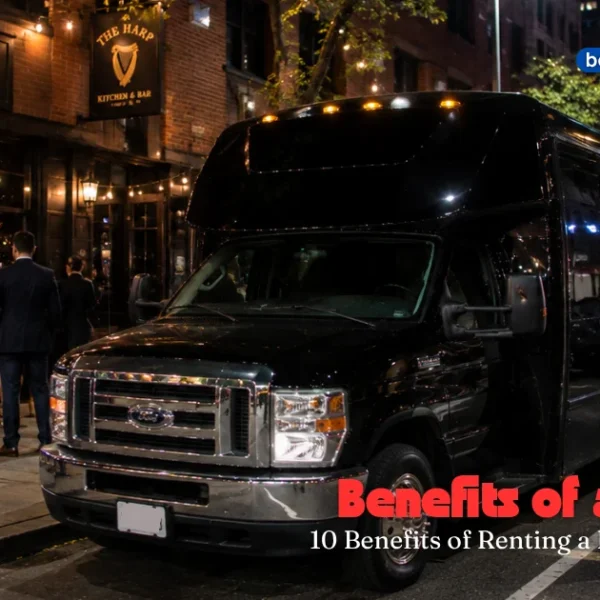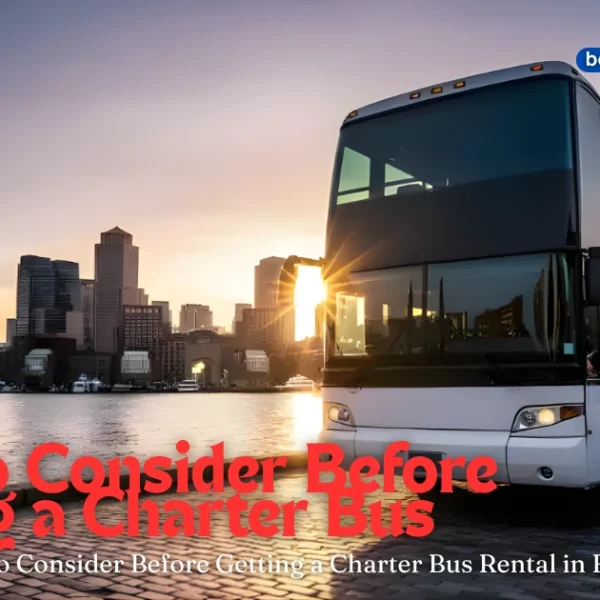

Large groups traveling in Boston have several transportation options, and the right choice depends on how many people are traveling, where they need to go, and how complex the itinerary is. Double-decker coaches and charter buses can accommodate larger groups, while minibuses and Sprinter vans suit smaller parties. Multiple cars or rideshares offer flexibility, and the MBTA can work for groups traveling along well-connected public transit routes.
This guide covers six practical ways to transport a large group in Boston, focusing on vehicle capacity, comfort, cost, luggage, multi-stop travel, and Boston-specific planning considerations. You’ll learn how each option works, where it fits best, and what to consider before choosing transportation.
Table of Contents
1. Double-Decker Coach Bus
Capacity: Up to 81 passengers
Luggage: Up to 35 pieces
Comfort: High-capacity seating with climate control and group amenities
Price: About $1,800–$2,100 depending on trip details
Multi-stop Trips: Well suited to planned sightseeing and event itineraries
Best For: Very large groups, sightseeing tours, major events, and organized group travel
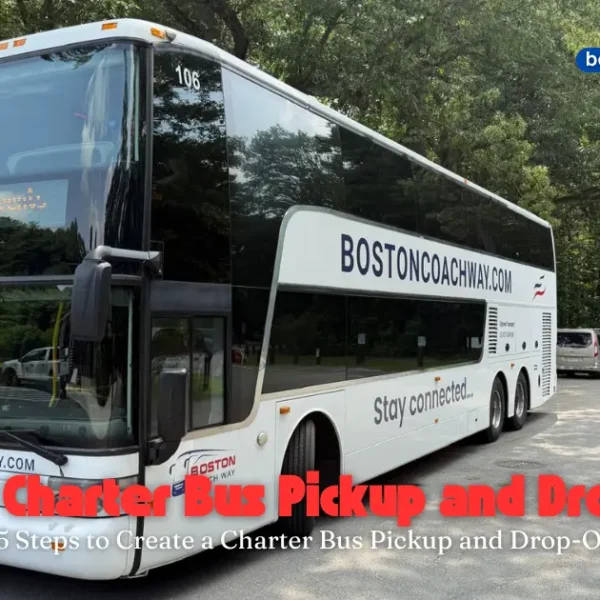
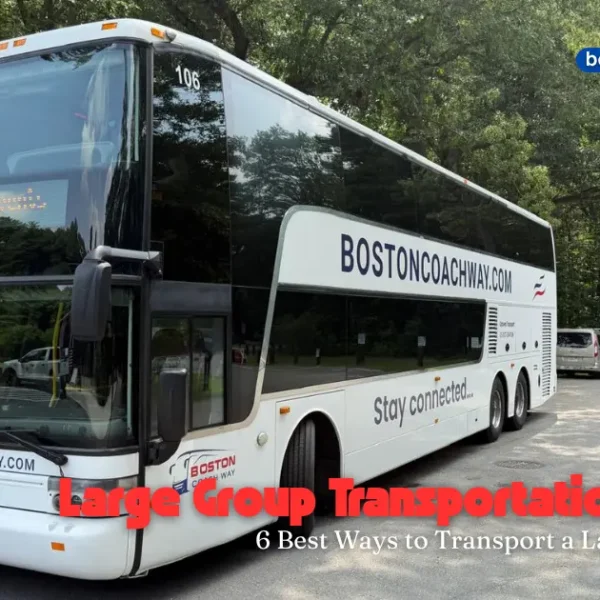
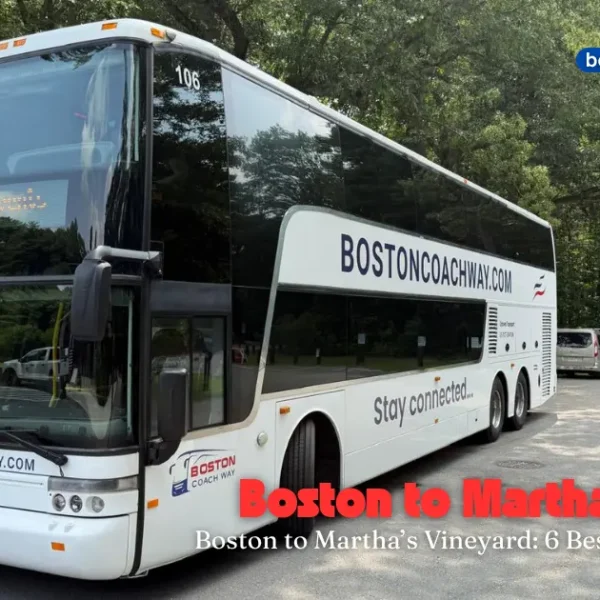
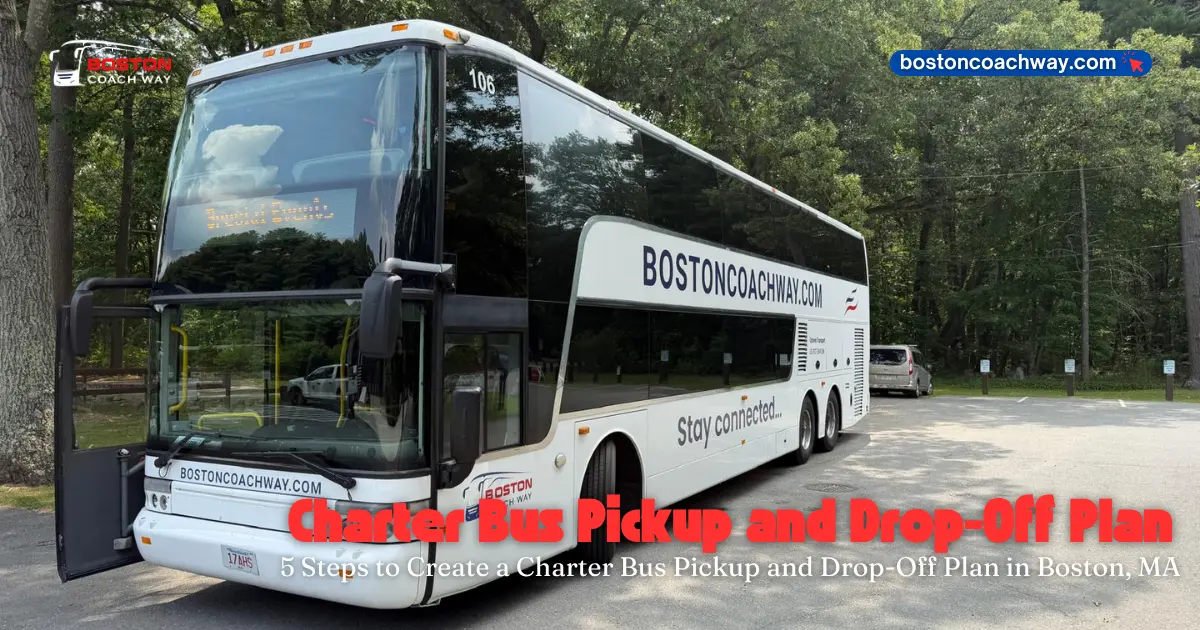
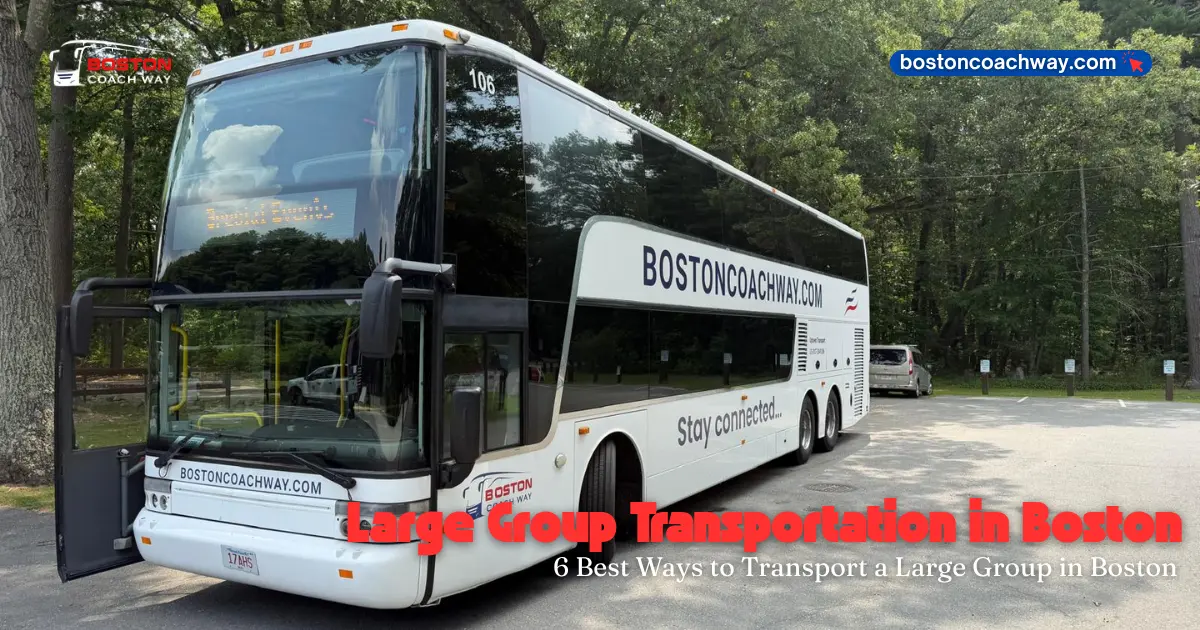
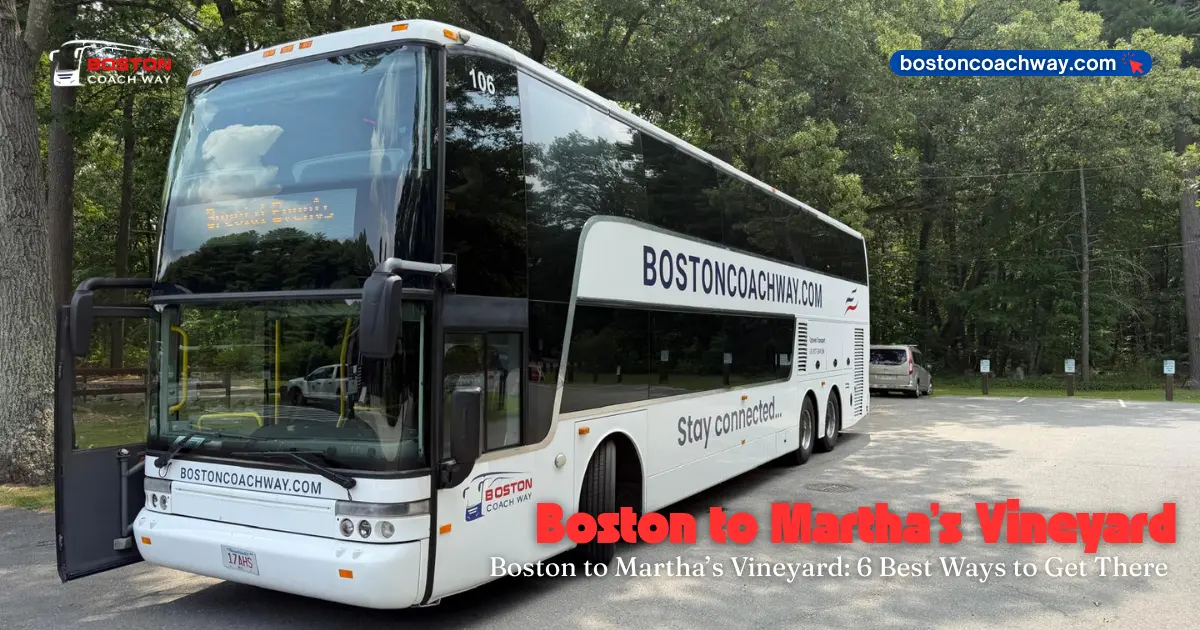
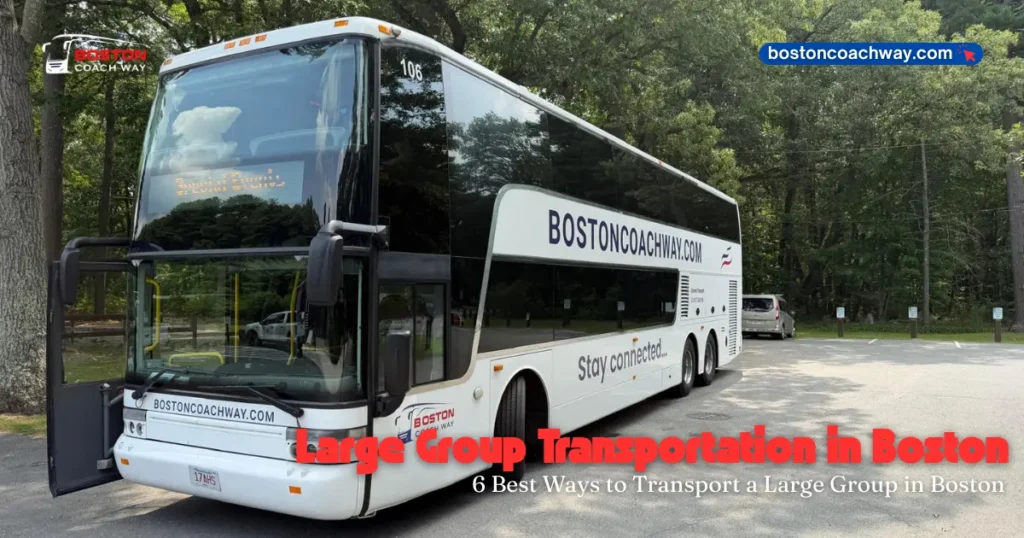
A double-decker coach bus is a practical choice when passenger capacity is the main transportation requirement. A double-decker coach accommodates up to 81 passengers with space for up to 35 pieces of luggage, allowing a very large group to travel together rather than splitting across several vehicles.
The high capacity makes this option useful for Boston sightseeing, large events, school or tour groups, and other organized trips with a shared itinerary. It can also simplify coordination when everyone needs to reach the same destination at a similar time.
The main limitation is vehicle size. A double-decker requires suitable access for pickup, drop-off, and routing, so the itinerary should be reviewed before booking. Dense areas such as Downtown Boston, Back Bay, and busy event districts can require more careful loading and route planning.
Choose a double-decker when your group is large enough to benefit from its 81-passenger capacity and the planned route can accommodate the vehicle. For smaller groups, a coach bus, minibus, or Sprinter van may provide a better fit.
2. Charter Bus
Capacity: Up to 56 passengers
Luggage: Up to 45 pieces
Comfort: Reclining seats, climate control, Wi-Fi, and luggage storage
Price: About $1,080–$1,400 depending on trip details
Multi-stop Trips: Well suited to scheduled multi-stop travel
Best For: Corporate groups, schools, sports teams, weddings, conferences, airport transfers, and tours
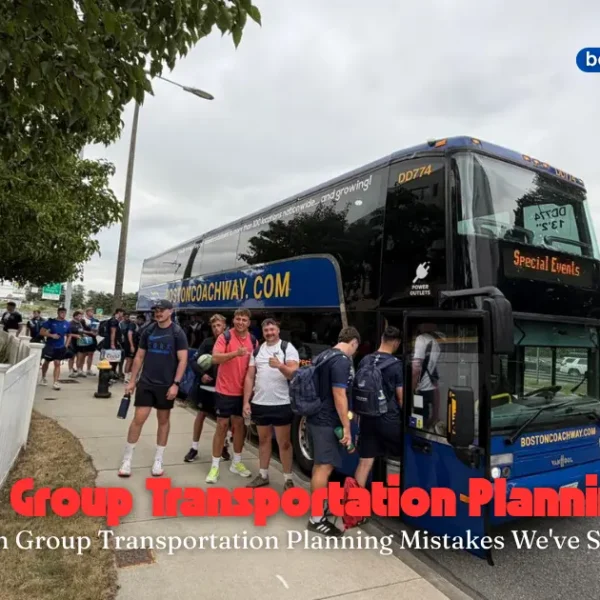
A charter bus is one of the most versatile options for medium to large groups traveling on a planned itinerary. A coach bus accommodates up to 56 passengers and up to 45 pieces of luggage, making it suitable for groups that need more capacity than a minibus without moving to an 81-passenger double-decker.
The biggest benefit is centralized group transportation. A dedicated vehicle and professional driver allow passengers to travel together between hotels, Logan International Airport, venues, campuses, attractions, and other destinations.
Charter buses also work well when the itinerary includes multiple stops. Instead of coordinating several drivers, the group can follow one planned route and schedule. This can be especially useful for weddings, corporate events, school trips, sports teams, and sightseeing.
The main consideration is matching the vehicle to the actual itinerary. Passenger count, luggage, pickup locations, parking access, and trip duration all affect the appropriate vehicle.
Choose a charter bus when your group needs shared transportation, dedicated routing, and enough capacity for a coordinated Boston itinerary.
3. Minibus or Shuttle
Capacity: Up to 28 passengers
Luggage: Up to 10 pieces
Comfort: Suitable for local and medium-length group trips
Price: About $840–$1,140 depending on trip details
Multi-stop Trips: Flexible for local itineraries
Best For: Smaller corporate groups, weddings, hotel shuttles, school groups, and event transportation
A minibus or shuttle works well when your group is too large for a van but does not require a full-size coach. A shuttle bus has capacity for up to 28 passengers and space for up to 10 pieces of luggage.
This midsize option can be useful for hotel-to-venue transportation, airport transfers, corporate meetings, weddings, school outings, and local event shuttles. A smaller vehicle can also be easier to coordinate for itineraries involving several Boston pickup and drop-off points.
Capacity should remain the starting point. A group of 18 may fit comfortably within a minibus, while a group of 40 would require a larger coach or multiple vehicles. Luggage can also change the calculation, particularly for airport transportation.
Boston’s dense streets and busy destinations make route and loading considerations important. Confirm the pickup location, destinations, number of stops, and luggage requirements before selecting the vehicle.
Choose a minibus when your group size falls within its capacity, and you want private, coordinated transportation without booking a full-size motorcoach.
4. Sprinter Van
Capacity: 8–14 passengers
Luggage: Up to 10 pieces
Comfort: High-roof cabin, reclining leather seating, climate control, Wi-Fi, and charging ports
Price: About $480–$780 depending on trip details
Multi-stop Trips: Flexible for smaller group itineraries
Best For: Executive travel, small corporate groups, airport transfers, family trips, and private outings
A Sprinter van is designed for smaller groups that still want private, chauffeur-driven transportation. A Mercedes-Benz Sprinter van accommodates 8–14 passengers and up to 10 pieces of luggage.
The smaller vehicle size makes a Sprinter useful for Logan Airport transfers, corporate meetings, executive travel, family outings, and multi-stop trips around Boston. Amenities such as reclining seats, climate control, Wi-Fi, charging ports, and privacy windows can make longer group journeys more comfortable.
The main limitation is capacity. A Sprinter van is not efficient for a genuinely large group once passenger numbers exceed 14. Using several vans introduces multiple drivers, vehicles, pickup arrangements, and coordination points.
For example, a 12-person corporate group traveling between Back Bay, the Seaport, and Logan Airport can fit within one van. A 50-person conference group cannot, so a minibus or charter coach would be more appropriate.
Choose a Sprinter when 5–14 passengers need private transportation and the itinerary benefits from a compact vehicle.
5. Multiple Cars or Rideshare
Capacity: Flexible, but larger groups require multiple vehicles
Luggage: Depends on the number and type of vehicles
Comfort: Varies by vehicle
Price: Variable based on vehicle count, distance, duration, and rideshare demand
Multi-stop Trips: Less centralized
Best For: Smaller groups, independent travelers, and groups with separate schedules
Multiple cars or rideshare services can work when a group is small or intentionally traveling on separate schedules. They provide individual flexibility without requiring a private bus reservation.
The limitation becomes clearer as the group grows. A 30-person group cannot travel in one rideshare vehicle, so several separate rides would need to be requested and coordinated. Each vehicle may have a different driver, pickup time, route, and arrival time.
Luggage can create another challenge. Airport groups may need several vehicles to accommodate suitcases, while groups attending events may need to coordinate everyone around the same arrival time. Parking can also become more complicated when several cars reach the same Boston destination.
Multiple cars still make sense for groups that need independent transportation. They can also suit smaller parties visiting different destinations or travelers who do not need to stay together throughout the trip.
For a large group following one itinerary, compare the total cost and coordination effort rather than the price of one individual ride. Include vehicle count, parking, fuel or rideshare fares, waiting time, and the number of destinations when evaluating the options.
6. MBTA and Public Transportation
Capacity: Varies by service and route
Luggage: Depends on the service and passenger requirements
Comfort: Varies by route, vehicle, and passenger volume
Price: Public transit fares based on the services used
Multi-stop Trips: Possible, but may require transfers
Best For: Groups traveling along well-connected public transit routes
MBTA public transportation can be practical for large groups when the planned destinations are well connected, and the group can follow scheduled transit services. Boston’s public transportation network includes buses, subway service, commuter rail, and ferry service, providing several ways to travel around the region.
The main advantage is access to an established public transit network without arranging a private vehicle. This can work well for groups traveling light between locations with straightforward connections.
The planning becomes more complex when the itinerary requires several transfers, long walks, substantial luggage, or everyone arriving together at a specific time. A school group, wedding party, or conference delegation may have different needs from independent travelers.
Group size also does not automatically make public transportation impractical. For example, MBTA specifically provides field-trip registration for groups containing 10 or more children, showing that organized group travel is possible within the system.
Choose MBTA services when your route aligns well with the transit network, your group can manage transfers, and private door-to-door transportation is not necessary. For complex multi-stop itineraries or groups that need centralized pickup and drop-off, compare public transit with private group transportation before finalizing the plan.
What Is the Best Way to Transport a Large Group in Boston?
A charter bus or coach bus can be the best way to transport a large group in Boston because it combines passenger capacity, a dedicated driver, centralized pickup and drop-off, and flexibility for multiple stops. However, the best option depends on the group’s size, luggage, itinerary, budget, and transportation needs. A minibus or Sprinter van can be more suitable for smaller groups, while a double-decker coach can accommodate a much larger party. Multiple cars or rideshares provide individual flexibility, and MBTA services can work when destinations are well connected by public transportation.
Transportation option | Typical capacity | Best suited for | Key advantage | Main consideration |
Double-decker coach bus | Up to 81 | Very large groups, sightseeing, major events | High passenger capacity | Requires suitable route and loading access |
Charter bus | Up to 56 | Corporate groups, schools, sports, weddings, tours | Keeps a large group together | Requires itinerary planning |
Minibus or shuttle | Up to 28 | Smaller events, hotel shuttles, airport transfers | Balances capacity and flexibility | Less capacity than a full-size coach |
Sprinter van | 8–14 | Executive travel, small groups, airport trips | Compact private transportation | Limited capacity |
Multiple cars or rideshare | Flexible | Smaller or independently traveling groups | Individual flexibility | More vehicles and coordination |
MBTA/public transportation | Varies | Transit-connected itineraries | Established Boston transit network | Fixed routes, schedules, and possible transfers |
For a large group, start by matching passenger count and luggage requirements to vehicle capacity, then consider the complete Boston itinerary.
Is a Charter Bus Cheaper Than Renting Multiple Cars?
Yes, a charter bus can be more cost-effective than renting multiple cars for a large group, but the total trip cost depends on the itinerary. Multiple cars can add rental fares, fuel, parking, tolls, and coordination costs. A charter bus consolidates transportation into one vehicle and can keep the group together.
For example, moving 40 passengers may require several cars, while one appropriately sized coach can accommodate the group. Compare the total transportation cost, including trip duration, distance, parking, and number of stops, rather than comparing a single-car rate with a bus rate.
Is a Charter Bus More Convenient Than Multiple Rideshares?
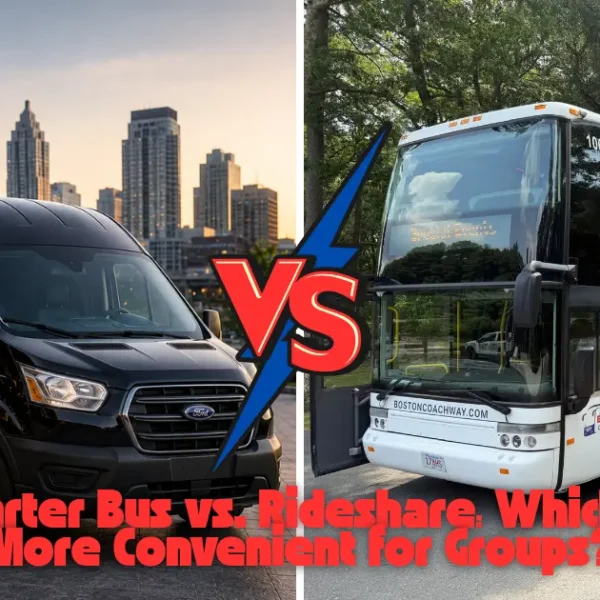
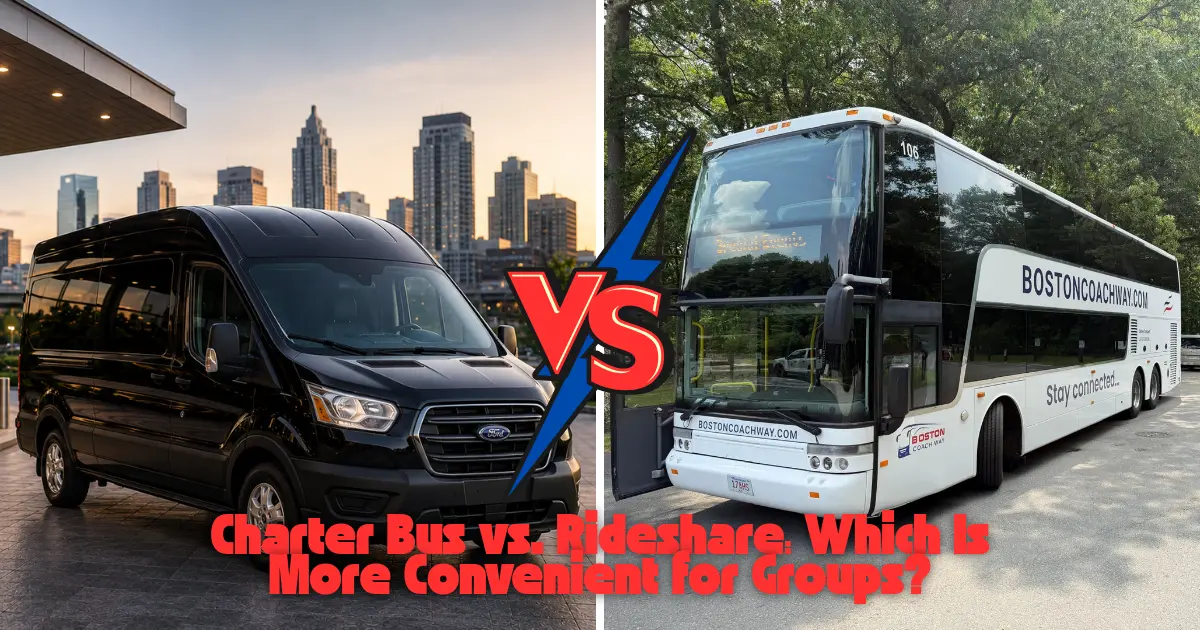
Yes, a charter bus is more convenient than multiple rideshares when a large group follows the same itinerary. One vehicle provides a centralized pickup, dedicated driver, and shared travel schedule, so passengers can stay together between hotels, venues, airports, and other Boston destinations.
Multiple rideshares require separate bookings, drivers, pickup arrangements, and arrival coordination. They can still work well for smaller groups or travelers with different destinations. For larger groups with several stops, compare how many vehicles you would need and how much coordination the itinerary requires before choosing between a charter bus and multiple rideshares.
Is Public Transportation Practical For a Large Group?
Yes, public transportation can be practical for a large group when the destinations are well connected, and the itinerary fits MBTA routes and schedules. It can work well for groups traveling light between transit-accessible locations, but transfers, walking distances, luggage, and fixed schedules can make coordination more difficult.
A group attending a scheduled event may also need everyone to arrive at the same time. Before choosing MBTA service, check the planned stops, transfer requirements, accessibility needs, and travel times. For groups requiring coordinated, multi-stop, or door-to-door transportation, a private vehicle may provide a simpler travel plan.
What to Consider When Transporting a Large Group Around Boston?
Choosing transportation for a large group involves more than finding enough seats. Passenger count, luggage, itinerary, pickup locations, travel time, accessibility, and budget all affect which option works best. Boston’s busy streets, major venues, Logan International Airport, and multiple event destinations can also influence how you plan the trip.
- Group size and vehicle capacity: Match the vehicle to the number of passengers without overlooking luggage or equipment.
- Itinerary and number of stops: A direct airport transfer has different requirements from a full-day Boston sightseeing itinerary.
- Pickup and drop-off locations: Confirm that the selected vehicle can access each hotel, venue, airport, campus, or attraction.
- Traffic and travel time: Allow additional time for congestion, construction, weather, and major events.
- Luggage and equipment: Airport travelers, sports teams, and school groups may need more storage than passenger numbers suggest.
- Accessibility: Identify wheelchair access or other mobility requirements before selecting a vehicle.
- Cost: Compare the complete trip cost, including vehicle type, duration, mileage, stops, parking, and other applicable expenses.
- Group coordination: Consider whether everyone needs to travel together and arrive at each destination on the same schedule.
Planning these factors together makes it easier to select transportation that fits the group, itinerary, and Boston travel conditions, rather than choosing a vehicle based on passenger capacity alone.

How to Choose the Right Transportation for Your Boston Group?
Choosing the right transportation starts with your group size, itinerary, luggage, and travel requirements. Follow these steps to match your Boston trip with the appropriate transportation option:
- Confirm your passenger count: Determine how many people are traveling and choose a vehicle with enough capacity for passengers, luggage, and equipment.
- Map your complete itinerary: List every pickup location, destination, stop, and return point. A direct airport transfer has different requirements from a multi-stop Boston sightseeing or event itinerary.
- Consider luggage and equipment: Airport groups, sports teams, school groups, and event attendees may need additional storage beyond the vehicle’s passenger capacity.
- Choose the appropriate vehicle: Smaller groups may fit a Sprinter van or minibus, while larger groups may need a charter bus or double-decker coach. MBTA service may work when destinations are well connected by public transportation.
- Review pickup and drop-off access: Check whether hotels, venues, airports, campuses, and attractions can accommodate the selected vehicle.
- Compare the total trip cost: Consider vehicle type, duration, mileage, number of stops, parking, tolls, and other trip-specific costs rather than comparing base rates alone.
- Plan for accessibility and timing: Identify mobility requirements and allow enough travel time for Boston traffic, weather, construction, and major events.
For additional planning considerations before booking, review the Charter Bus Rental Guide.