
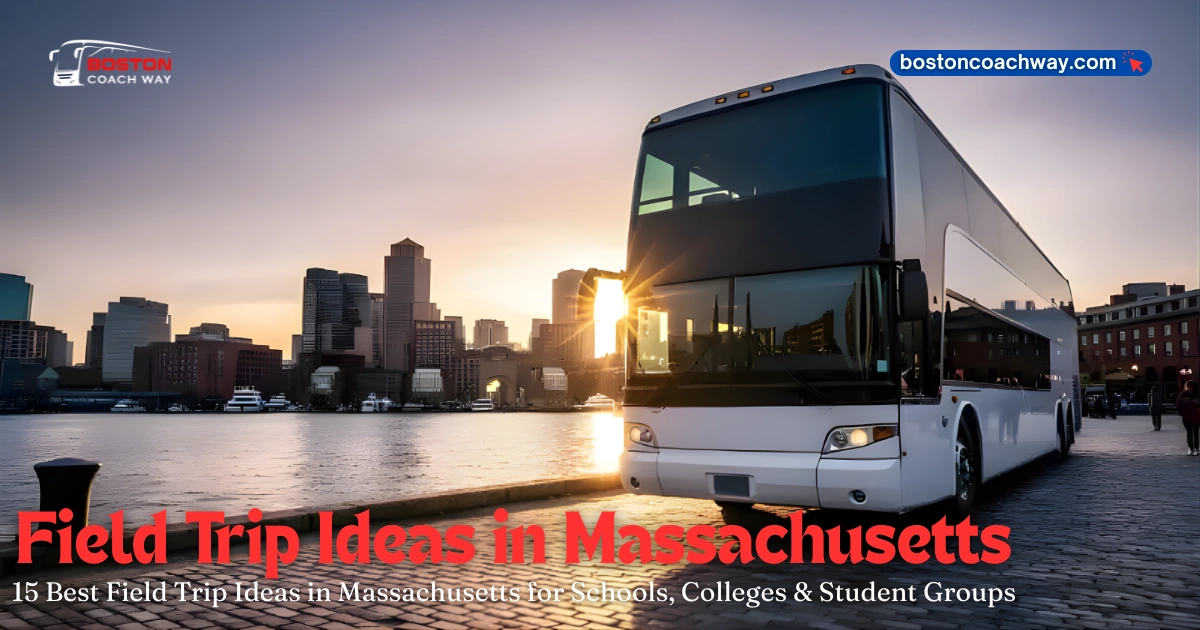

Massachusetts is one of the best states in the U.S. for educational field trips because it combines American history, STEM innovation, marine science, university culture, arts, and outdoor learning within a relatively small travel region. Students can explore Revolutionary War landmarks in Boston, visit science museums and aquariums, tour world-famous universities in Cambridge, and experience hands-on learning through living-history villages, wildlife parks, and interactive museums across the state.
This guide explores 15 Massachusetts field trip ideas for elementary schools, middle schools, high schools, colleges, universities, homeschool groups, and youth organizations. It also helps teachers and coordinators compare destinations by educational subject, grade-level suitability, indoor and outdoor activities, and transportation requirements.
Table of Contents
1. Freedom Trail
Location: Freedom Trl, Boston, MA 02108.
Best For: Middle school, high school, homeschool groups, college history programs.
Educational Focus: American Revolution, colonial Boston, civics, political history.
Best Season: Spring and fall.
The Freedom Trail is one of the most valuable history field trips in Boston, Massachusetts, because students can follow the real locations connected to the American Revolution instead of only reading about them in class. The trail stretches through downtown Boston and links churches, meeting halls, cemeteries, and historic buildings that shaped early American independence. Teachers often choose this trip to make colonial history, government, and civic education feel more visual and memorable for students.
Students commonly stop at Faneuil Hall, Old North Church, and Paul Revere House during guided educational tours. The walkable route also helps students understand how geography, trade, and public gathering spaces influenced revolutionary events in Boston. Because many landmarks sit close together, schools can organize half-day or full-day learning itineraries without complicated transportation planning.
2. Museum of Science
Location: 1 Science Pk, Boston, MA 02114.
Best For: Elementary school, middle school, STEM academies, science clubs.
Educational Focus: Engineering, astronomy, physics, biology, technology.
Best Season: Year-round.
The Museum of Science gives students an interactive learning experience centered around experimentation, engineering, and scientific discovery. Instead of static exhibits, students can participate in live demonstrations, explore technology-focused displays, and observe scientific principles through hands-on activities. This makes the museum one of the strongest STEM field trip destinations in Massachusetts for both younger students and advanced academic groups.
Popular attractions include the Hayden Planetarium, engineering exhibits, and the Theater of Electricity, where students observe high-voltage scientific demonstrations. Schools often use the museum to support classroom units related to robotics, energy, ecosystems, and space science. The indoor layout also makes it a reliable option for winter educational travel and rainy-day field trips across Massachusetts.
3. New England Aquarium
Location: 1 Central Wharf, Boston, MA 02110.
Best For: Elementary schools, middle schools, biology programs, homeschool groups.
Educational Focus: Marine biology, ocean conservation, environmental science.
Best Season: Year-round.
The New England Aquarium helps students explore marine ecosystems through immersive exhibits focused on ocean life and environmental conservation. Students can observe aquatic species from different regions of the world while learning how climate change, pollution, and habitat loss affect marine environments. The experience supports science curriculum topics related to biology, ecology, and sustainability.
The Giant Ocean Tank remains one of the aquarium’s most popular educational features because students can observe coral reef ecosystems, sea turtles, and tropical fish within a multi-level viewing environment. Interactive touch tanks and educational presentations also encourage hands-on learning. The aquarium’s location near Boston Harbor makes it easy for schools to combine the visit with waterfront educational activities and nearby museums.
4. MIT Museum
Location: Gambrill Center, 314 Main St, Cambridge, MA 02142.
Best For: High school students, college STEM programs, robotics clubs.
Educational Focus: Robotics, artificial intelligence, engineering, innovation.
Best Season: Year-round.
The MIT Museum introduces students to innovation, engineering, and emerging technology through exhibits connected to real scientific research. Many high schools and university programs choose this field trip because it exposes students to modern inventions, robotics, artificial intelligence, and creative problem-solving in an academic environment shaped by one of the world’s leading technology institutions.
Students can explore interactive robotics displays, holography projects, and technology exhibits connected to MIT research initiatives. The museum also encourages career-focused learning by helping students understand how engineering and computer science influence healthcare, transportation, architecture, and communication systems. Many schools pair the museum with nearby university tours to create broader STEM-focused educational experiences in Cambridge.
5. Harvard University
Location: Massachusetts Hall, Cambridge, MA 02138.
Best For: High school students, college groups, international student programs.
Educational Focus: Higher education, research culture, academic history.
Best Season: Spring and fall.
Harvard University gives students an opportunity to experience one of the most influential academic environments in the United States. Visiting the campus helps students understand university culture, academic expectations, and research-driven learning while exploring historic buildings, libraries, museums, and student spaces. High schools often organize Harvard tours to encourage college readiness and long-term academic motivation.
Walking through Harvard Yard introduces students to centuries of educational history connected to law, medicine, politics, literature, and science. Schools also use the trip to expose students to campus life before college applications begin. Nearby attractions like Harvard museums and Cambridge academic institutions can easily expand the educational experience into a full-day itinerary.
6. Plimoth Patuxet Museums
Location: 137 Warren Ave, Plymouth, MA 02360.
Best For: Elementary schools, middle schools, social studies programs.
Educational Focus: Colonial America, Indigenous history, cultural education.
Best Season: Spring and fall.
Plimoth Patuxet Museums creates a hands-on history experience by recreating daily life in 17th-century New England. Students can interact with historical interpreters, observe traditional building methods, and learn how Indigenous communities and English settlers lived during early colonial America. The museum helps transform textbook history into a more immersive learning experience.
Students often explore recreated colonial homes, farming areas, and Wampanoag cultural exhibits during guided educational tours. The museum also supports discussions about early settlement challenges, agriculture, trade, and cultural interaction in New England. Outdoor demonstrations and seasonal programs make the experience especially engaging during spring educational travel.
7. Salem Witch Museum
Location: 19 1/2 N Washington Square, Salem, MA 01970.
Best For: Middle school, high school, history and social studies classes.
Educational Focus: Salem Witch Trials, colonial history, justice systems.
Best Season: Spring and early fall.
The Salem Witch Museum helps students examine how fear, misinformation, and public pressure shaped the Salem Witch Trials in 1692. Schools often choose this field trip to support social studies and history lessons focused on justice systems, religion, colonial society, and mass hysteria. The museum encourages students to analyze how historical events can influence modern discussions about law and public opinion.
Narrated exhibits and historical presentations guide students through the events leading to the trials and executions. Salem’s preserved historic district also allows educational groups to continue learning outside the museum through walking tours and nearby maritime attractions connected to early New England history.
8. Old Sturbridge Village
Location: 1 Old Sturbridge Village Rd, Sturbridge, MA 01566.
Best For: Elementary schools, middle schools, homeschool programs.
Educational Focus: Early American life, agriculture, craftsmanship, living history.
Best Season: Spring and fall.
Old Sturbridge Village recreates everyday life in rural New England during the 1830s through working farms, trade shops, homes, and historical reenactments. Students can watch blacksmiths, printers, cooks, and farmers demonstrate how communities functioned before industrial technology changed transportation, communication, and labor systems across the region.
The village encourages experiential learning because students move through a functioning historical environment rather than traditional exhibit halls. Teachers often use the trip to support lessons related to economics, trade, farming, and early New England culture. Seasonal demonstrations also provide different educational experiences throughout the year.
9. Franklin Park Zoo
Location: 1 Franklin Park Rd, Boston, MA 02121.
Best For: Elementary schools, middle schools, youth organizations.
Educational Focus: Wildlife conservation, ecosystems, environmental science.
Best Season: Spring through early fall.
Franklin Park Zoo gives students direct exposure to wildlife conservation, biodiversity, and ecosystem education through outdoor exhibits and animal programs. Students can observe species from different continents while learning how habitats, climate, and conservation efforts affect wildlife survival. The zoo works especially well for younger students because visual learning improves engagement and memory retention.
The zoo features gorillas, giraffes, lions, tropical birds, reptiles, and educational exhibits connected to habitat preservation. Teachers often pair the visit with classroom lessons about food chains, biodiversity, and environmental responsibility. The large outdoor layout also supports guided group activities and movement-based learning experiences.
10. Boston Children's Museum
Location: 308 Congress St, Boston, MA 02210.
Best For: Preschool, kindergarten, elementary school groups.
Educational Focus: STEAM learning, creativity, sensory education.
Best Season: Year-round.
Boston Children’s Museum is designed around active participation, making it one of the best educational field trips in Massachusetts for younger students. Instead of passive observation, children interact with exhibits focused on creativity, engineering, movement, problem-solving, and sensory exploration. The museum encourages students to learn through touch, collaboration, and experimentation.
Interactive exhibits support early childhood development through art stations, construction activities, cultural displays, and movement-based learning spaces. Teachers often use the museum to strengthen communication skills, teamwork, and curiosity-driven exploration. Its indoor environment also makes it practical for year-round educational travel and organized school scheduling.
11. Norman Rockwell Museum
Location: 9 Glendale Rd, Stockbridge, MA 01262.
Best For: High school art students, media studies programs, university groups.
Educational Focus: American illustration, visual storytelling, art history.
Best Season: Fall.
The Norman Rockwell Museum helps students understand how illustration and storytelling influence American culture. The museum contains original artwork, magazine covers, sketches, and studio materials that show how visual media documented social issues, family life, politics, and historical events across different decades. Art programs often use the museum to connect creative expression with communication and history.
Students can analyze how Rockwell used imagery to communicate emotion, identity, and cultural values. The Berkshires location also introduces students to Western Massachusetts arts communities and scenic educational travel opportunities connected to museums, literature, and regional history.
12. Springfield Museums
Location: 21 Edwards St, Springfield, MA 01103.
Best For: Elementary through high school students.
Educational Focus: Science, literature, history, art education.
Best Season: Year-round.
Springfield Museums combines multiple educational subjects into one museum campus, allowing schools to explore science, literature, history, and art during a single trip. This flexibility makes the destination useful for mixed-age groups and interdisciplinary learning programs where students have different academic interests and curriculum goals.
The museum campus includes the Amazing World of Dr. Seuss Museum, natural history collections, science exhibits, and fine art galleries. Schools often choose Springfield Museums because the walkable campus simplifies supervision and scheduling while still providing diverse educational experiences throughout the day.
13. USS Constitution Museum
Location: Building 22, Charlestown Navy Yard, Charlestown, MA 02129.
Best For: Middle school, high school, history groups.
Educational Focus: Maritime history, naval engineering, Revolutionary War studies.
Best Season: Spring and summer.
The USS Constitution Museum introduces students to naval history, maritime engineering, and Revolutionary War-era military life through interactive exhibits and harbor-based learning experiences. Located near the historic USS Constitution warship, the museum helps students understand how shipbuilding, navigation, and naval strategy influenced early American defense and trade.
Students can explore exhibits about sailors’ daily lives, navigation systems, ship construction, and Boston Harbor operations. Many schools combine the museum with nearby Freedom Trail landmarks to create broader educational itineraries focused on colonial America and the American Revolution.
14. Boston Public Market
Location: 100 Hanover St, Boston, MA 02108.
Best For: High school students, culinary programs, business classes.
Educational Focus: Entrepreneurship, sustainability, food systems, local economy.
Best Season: Year-round.
Boston Public Market gives students a real-world introduction to local commerce, food systems, and small-business operations. Instead of traditional museum exhibits, students learn by observing how Massachusetts farmers, bakers, seafood suppliers, and entrepreneurs operate within an active marketplace environment. The experience supports practical discussions related to sustainability, agriculture, hospitality, and economics.
Students can interact with vendors, explore regional products, and observe how local supply chains support communities across Massachusetts. Teachers often use the market to connect classroom lessons with real business operations and consumer behavior in an urban setting.
15. Boundless Adventures
Location: 154 River Rd W, Berlin, MA 01503.
Best For: Youth organizations, leadership groups, middle school students.
Educational Focus: Team-building, outdoor education, leadership development.
Best Season: Spring through fall.
Boundless Adventures focuses on outdoor leadership development through physical challenges, teamwork activities, and confidence-building experiences. Unlike traditional educational field trips, students participate in aerial obstacle courses, ziplining, and group challenges that strengthen communication, decision-making, and collaboration skills in a natural outdoor environment.
Schools often choose Boundless Adventures for student leadership programs, team bonding, and experiential learning activities outside the classroom. The park’s obstacle-based structure encourages students to solve problems together while building resilience, trust, and group coordination skills.
How to Choose the Right Field Trip for Your Students
Choosing the right field trip starts with understanding your students’ educational goals, attention span, travel limitations, and learning environment preferences. A destination that works well for elementary students may not provide enough academic depth for high school or university groups. Schools should evaluate both educational value and logistical planning before selecting a field trip destination in Massachusetts.
Step 1: Match the Field Trip With Learning Goals
Choose destinations that directly support classroom subjects and curriculum objectives. History classes often benefit from immersive locations like Freedom Trail or Plimoth Patuxet Museums, while STEM programs may gain more value from the Museum of Science or MIT Museum.
Step 2: Consider Student Age and Attention Span
Younger students usually engage better with movement-based and hands-on activities, while older students often prefer academic tours, research environments, and discussion-focused experiences. Selecting age-appropriate destinations improves participation and educational retention during the trip.
Step 3: Evaluate Travel Distance and Scheduling
Long travel times can reduce student focus and complicate school coordination. Schools should consider transportation time, departure schedules, traffic conditions, restroom breaks, and meal planning before confirming destinations across Massachusetts.
Step 4: Review Accessibility and Group Needs
Field trips should support students with mobility, medical, sensory, or learning accommodations. Schools should also evaluate supervision requirements, group size limitations, and indoor versus outdoor conditions before finalizing reservations.
Step 5: Plan Around Budget and Seasonal Conditions
Educational travel costs may include tickets, meals, transportation, parking, and overnight accommodations. Schools should also account for seasonal weather, especially when organizing outdoor field trips during colder New England months.
What are the Best Massachusetts Field Trips by Subject?
The best Massachusetts field trips by subject include the Freedom Trail for American history, Museum of Science for STEM, New England Aquarium for marine biology, MIT Museum for technology and innovation, Norman Rockwell Museum for art, Franklin Park Zoo for environmental science, and Boundless Adventures for leadership and team-building. Each destination supports different classroom objectives through practical learning experiences.
History trips introduce students to the American Revolution and colonial heritage, while science-focused visits explore engineering, marine ecosystems, and wildlife conservation. Art programs develop visual interpretation and storytelling skills. Outdoor activities at Boundless Adventures encourage teamwork, communication, and problem-solving. Teachers can select destinations based on curriculum requirements, student interests, and academic development goals.
What are the Best Massachusetts Field Trips by Grade Level?
The best Massachusetts field trips by grade level include the Boston Children’s Museum and Franklin Park Zoo for elementary students, Freedom Trail and New England Aquarium for middle school students, MIT Museum and Harvard University for high school students, and Boston Public Market and Norman Rockwell Museum for college and university groups.
Elementary students benefit from hands-on exhibits and wildlife observation, while middle school students explore history, marine biology, and experiential science. High school trips introduce advanced STEM concepts, university environments, and college preparation. For college students, business operations, sustainability, art history, and visual communication provide opportunities for subject-specific learning and practical academic discussions.
What are the Best Indoor Field Trips in Massachusetts?
The best indoor field trips in Massachusetts include the Museum of Science, MIT Museum, New England Aquarium, Boston Children’s Museum, Springfield Museums, and Salem Witch Museum. These destinations offer year-round educational experiences, making them suitable for winter visits and rainy-day school activities.
The Museum of Science and MIT Museum introduce students to engineering, robotics, and scientific innovation, while the New England Aquarium supports marine biology and ocean conservation lessons. Younger learners benefit from interactive exhibits at Boston Children’s Museum. Springfield Museums combine art, history, literature, and science, while Salem Witch Museum provides insights into colonial history and the Salem Witch Trials. These indoor attractions help schools maintain engaging learning schedules regardless of weather conditions.
What are the Best Outdoor Field Trips in Massachusetts?
The best outdoor field trips in Massachusetts include the Freedom Trail, Plimoth Patuxet Museums, Old Sturbridge Village, Franklin Park Zoo, and Boundless Adventures. These destinations offer hands-on learning beyond traditional classrooms.
The Freedom Trail introduces students to American history through walking tours of Revolutionary-era landmarks, while Plimoth Patuxet Museums and Old Sturbridge Village bring colonial and early New England life to the forefront through historical demonstrations. Franklin Park Zoo supports wildlife observation and environmental education, helping students understand animal habitats and conservation. For leadership development, Boundless Adventures offers ropes courses, ziplining, and team challenges that encourage communication, confidence, and problem-solving through active outdoor participation.
What are the Tips for Planning a Massachusetts Field Trip?
Planning a successful Massachusetts field trip requires advance reservations, reliable transportation, proper supervision, and preparation for changing weather conditions. Teachers and organizers can use the following tips to avoid common scheduling and coordination problems.
1. Book Field Trip Destinations in Advance
Reserve popular museums, aquariums, historical attractions, and educational programs several weeks or months ahead. Spring and early fall are busy periods for school visits, so early booking helps secure preferred dates, group admission rates, and educational sessions.
2. Arrange Reliable Group Transportation
Choose transportation based on student numbers, travel distance, and destination access. Consider Boston traffic, parking limitations, pickup locations, and travel time when arranging buses or other group vehicles.
3. Establish Student Supervision Groups
Assign teachers and chaperones to smaller student groups before departure. Set clear responsibilities, attendance procedures, meeting points, and headcounts to keep students organized throughout the trip.
4. Plan Meals and Restroom Breaks
Check whether the destination provides dining areas, picnic spaces, or nearby food options. Schedule meal periods and restroom stops in advance, particularly for younger students and longer educational trips.
5. Prepare for Massachusetts Weather
Check the forecast before departure and consider seasonal conditions when choosing indoor or outdoor activities. Pack appropriate clothing, footwear, rain gear, and an indoor backup plan when necessary.
6. Review Safety and Emergency Procedures
Prepare emergency contact lists, relevant medical information, first-aid supplies, and procedures for lost students or unexpected incidents. Make sure teachers, chaperones, and transportation providers understand their responsibilities.
7. Prepare Students Before Departure
Explain the destination, educational objectives, itinerary, and behavioral expectations before the trip. Share relevant classroom materials so students understand what they will learn and which activities require their participation.
8. Coordinate the Itinerary and Group Schedule
Create a detailed itinerary covering departure, arrival, admission, activities, meals, breaks, and return times. Include extra time for traffic, parking, check-in, and transitions between destinations, especially when traveling through busy areas of Boston.
Following these planning tips helps schools manage group scheduling, transportation, student safety, and educational activities more effectively. A well-organized itinerary also gives teachers more time to focus on learning outcomes rather than solving last-minute logistical problems.
When Should Schools Use Private Group Transportation?
Schools should use private group transportation when student travel requires organized scheduling, safer coordination, and efficient movement between destinations. Large student groups often face parking limitations, delayed arrivals, and supervision challenges when using multiple personal vehicles or public transit, especially around busy educational areas like Boston and Cambridge.
Private buses and group vehicles work especially well for college campus tours, museum visits, multi-stop itineraries, and long-distance educational trips across Massachusetts because students and staff can travel together on one schedule. Coordinated transportation also simplifies attendance tracking, loading procedures, lunch stops, and emergency communication during the trip. Many schools choose coaches for field trips because it reduces logistical problems while improving time management, group supervision, and overall travel efficiency throughout the day.

What Type of Transportation Works Best for School Field Trips?
Choosing the right vehicle depends on group size, travel distance, luggage requirements, and the type of educational trip being planned. Smaller academic groups may only need a sprinter van, while large school organizations traveling across Massachusetts usually require full-size coach buses for better coordination and scheduling efficiency.
Group Size | Recommended Vehicle | Best Use Case |
8–14 students | Sprinter Van | Small educational groups, college tours, academic competitions, museum visits |
15–30 students | Minibus | Elementary school trips, local educational travel, short-distance field trips |
25–40 students | Shuttle Bus | Multi-class transportation, urban museum trips, group campus visits |
40–56 students | Coach Bus | Large school groups, long-distance educational travel, statewide field trips |
56+ students | Double Decker Bus | District-wide events, university programs, large student organizations |