






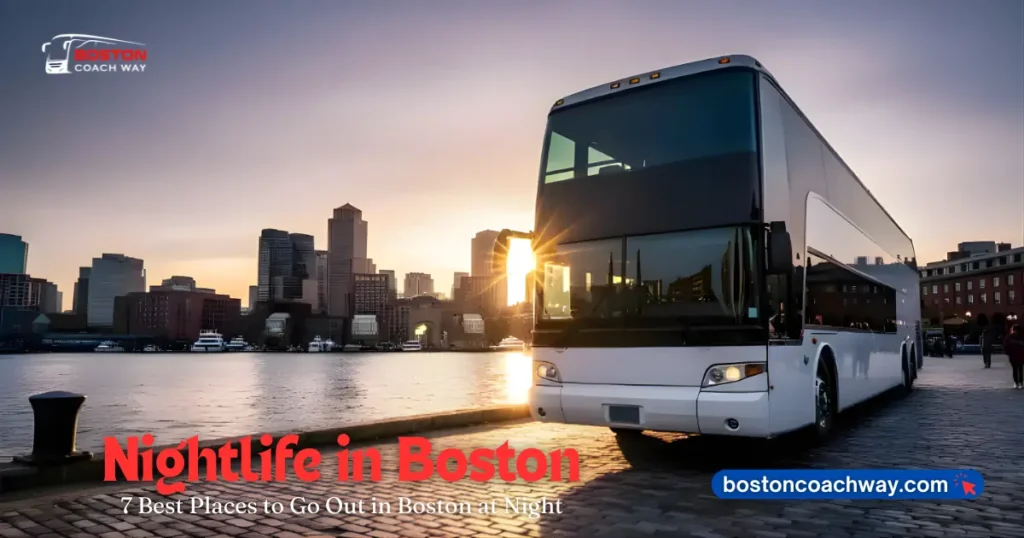
Boston’s nightlife is defined by neighborhoods rather than a single strip, with each area offering a distinct after-dark experience shaped by culture, crowds, and timing. In Boston, nightlife ranges from theatre-led evenings downtown to waterfront clubs in the Seaport, cocktail-focused nights in Back Bay, and sports-driven energy around Fenway. Some neighborhoods are built for bar hopping and late-night dancing, while others favor live music, supper clubs, or relaxed lounges that reward planning over spontaneity.
This guide breaks down the seven best places to go out in Boston at night, explaining what makes each area best for nightlife, who it suits best, and why you might choose one neighborhood over another. Beyond locations, it also covers the top things to do in Boston at night, including attractions, nightlife for adults and young adults, the city’s best clubs and bars, and where to stay if nightlife is your priority. So let’s get started.
1. Downtown & Theatre District
The Downtown & Theatre District is Boston’s performance-led nightlife core, built around theatres, concert venues, bars, clubs, and late-night dining packed into a highly walkable area. Nightlife here is shaped by show schedules and crowd movement rather than a single scene, which makes it one of the few places in the city where cultural events and going out naturally merge into one continuous evening.
Downtown removes friction from planning a full night out. Theatres, bars, lounges, and food spots sit within a few blocks of each other, so you don’t need rideshares, reservations at multiple locations, or a fixed plan. This makes the area especially effective for nights that start with entertainment and evolve organically as crowds spill out after shows.
Nightlife energy is activated by the Boston Theatre District, anchored by venues such as the Citizens Bank Opera House, Emerson Colonial Theatre, and the Wang Theatre. When performances end, surrounding streets funnel people toward cocktail bars, DJ-led lounges, and clubs that extend into Chinatown, where late-night dining keeps foot traffic active close to last call.
At night, the best things to do downtown follow a clear progression. Many evenings begin with a Broadway tour, concert, or comedy show, continue with cocktails or bar hopping nearby, and finish with dancing, lounges, or late-night food. For those who prefer experiences over alcohol-focused nightlife, guided ghost tours and evening walking tours add an alternative way to stay out after dark without entering clubs.
Downtown is best for first-time visitors, show-goers, mixed-age groups, and travelers who value choice over commitment. Choose Downtown & Theatre District if you want the freedom to decide what comes next as the night unfolds.
2. Seaport District
The Seaport District is Boston’s club-forward, late-night waterfront hub, offering modern nightlife that runs later and leans heavier on music, visuals, and social energy. Unlike performance-led Downtown or dining-first Back Bay, Seaport is built around nightlife venues themselves, with clubs, rooftop bars, and lounges acting as the primary draw rather than an add-on to another activity.
Seaport delivers a predictable, high-energy night without relying on events or schedules. You come here when the goal is dancing, DJ-driven music, and staying out as late as Boston allows. Venues are larger, crowds are more nightlife-intentional, and the atmosphere is built for weekends, celebrations, and nights that revolve around music rather than conversation.
The area’s nightlife is activated by the Seaport District itself, with the Boston Harborwalk creating natural movement between venues and seasonal outdoor energy. Rooftop bars like those atop The Envoy draw early crowds for sunset drinks, while nearby waterfront piers and modern buildings support larger clubs and late-night lounges that anchor the district after dark.
Seaport works best as a single-focus experience. Most nights begin with drinks overlooking the harbor, transition into DJ lounges or rooftop bars, and peak at nightclubs where music and dancing take over. In warmer months, harbor cruises and nighttime sails extend the evening before club hours, adding a visual, city-lights backdrop that other neighborhoods can’t replicate.
This neighborhood is best for young professionals, groups, celebrations, and visitors specifically looking for club nightlife. Choose Seaport if dancing and music are the priority.
3. Back Bay & Beacon Hill
Back Bay & Beacon Hill represent Boston’s dining-led, conversation-first nightlife, where evenings are structured around restaurants, cocktail lounges, and refined bars rather than loud clubs or late-night dancing. This area is not built for bar hopping at speed. It’s designed for slower, intentional nights where atmosphere, drinks, and company matter more than volume.
Nightlife seekers choose Back Bay and Beacon Hill because these neighborhoods solve for controlled, polished evenings. It’s where people go when they want a clear start and finish to the night, usually anchored by dinner, followed by drinks in a setting that allows conversation. Unlike Downtown or Seaport, nightlife here rewards planning, reservations, and pacing rather than spontaneity.
Nightlife activity is activated by landmarks such as Back Bay and Beacon Hill, with Newbury Street acting as the main spine for evening movement. Restaurants, wine bars, and cocktail lounges cluster along Newbury Street and its side streets, while the Charles River Esplanade adds an early-evening dimension for walks before drinks. These landmarks don’t create nightlife through crowds, but through density of high-quality venues within a short radius.
The best things to do at night here follow a deliberate rhythm. Evenings typically begin with dinner, move into cocktail bars or speakeasy-style lounges, and end earlier than in Seaport or Downtown. Live music lounges and piano bars provide background energy without overwhelming the space, keeping the focus on social interaction rather than performance or dancing.
This neighborhood is best for couples, professionals, older millennials, and anyone prioritizing quality over intensity. Choose Back Bay & Beacon Hill if you want a refined night that feels composed and intentional.
4. Fenway–Kenmore
Fenway–Kenmore is Boston’s event-anchored nightlife zone, where nights are built around games, concerts, and shared crowd energy rather than curated venues or late-night clubbing. The nightlife identity here is loud, social, and time-bound, peaking before and immediately after major events instead of unfolding gradually through the night.
Fenway–Kenmore amplifies the momentum of live events. When a game or concert ends, thousands of people move at once, creating instant energy that spills into nearby bars and music venues. This makes the area ideal for nights that start with a clear plan and end with celebration, rather than open-ended bar hopping.
Nightlife is activated by Fenway Park, the oldest active ballpark in Major League Baseball and one of the city’s strongest nightlife catalysts. On game and concert nights, crowds funnel onto Lansdowne Street, where bars and live music venues are tightly packed. Nearby performance spaces and music halls reinforce the area’s identity as a place where sports, concerts, and nightlife overlap in a single corridor.
At night, the best things to do in Fenway–Kenmore follow a clear event-driven flow. Many evenings begin with pre-game or pre-show drinks, move into live music or packed sports bars during peak crowd hours, and finish with casual bar hopping while the neighborhood is still buzzing. The nightlife experience is fast, communal, and built around shared excitement rather than exclusivity or atmosphere.
This neighborhood is best for sports fans, concertgoers, groups of friends, and young adults who enjoy high-energy crowds. Choose Fenway–Kenmore if your night revolves around a game, show, or large event.
5. Cambridge (Central & East Cambridge)
Cambridge offers Boston’s most music-led and alternative nightlife, shaped by universities, live performance venues, and a crowd that values atmosphere over spectacle. Rather than clubs or event surges, nightlife here is built around live music, intimate bars, and late-evening cultural experiences that reward curiosity and conversation.
Nightlife seekers choose Cambridge when they want a night anchored by live performances, thoughtful programming, or smaller venues where the focus is on sound and community rather than crowd size. It appeals to those who prefer a planned experience over spontaneous bar hopping and who value quality over volume.
Nightlife activity centers around Harvard Square, which acts as the district’s main nightlife anchor. Long-standing venues such as The Sinclair and Club Passim drive evening foot traffic with concerts, acoustic sets, and touring acts. In East Cambridge, performance spaces and neighborhood bars extend nightlife beyond the square, while proximity to the Charles River adds a quieter, late-evening atmosphere that contrasts with Boston’s busier nightlife districts.
The best things to do at night in Cambridge revolve around experience-first planning. Evenings often start with dinner or drinks, followed by a live show, DJ night, or curated performance. Afterward, smaller bars and lounges allow the night to wind down naturally rather than escalate. Unlike Seaport or Fenway, nightlife here rarely peaks all at once. It unfolds steadily and intentionally.
This neighborhood is best for students, music lovers, creatives, and locals who prefer substance over spectacle. Choose Cambridge if live music, thoughtful crowds, and a relaxed pace matter more than dancing or late-night clubbing.
6. South End
The South End represents Boston’s most culture-driven and community-focused nightlife, where evenings revolve around live music, artistic spaces, and inclusive social scenes rather than volume or spectacle. Nightlife here is shaped by creativity and identity, making it one of the city’s most distinctive after-dark environments.
South End offers expression and atmosphere without pressure. This is where people go when they want to enjoy music, art, and social connection in spaces that feel welcoming and intentional. The area attracts those who value identity, creativity, and comfort over trend-chasing or late-night club intensity.
Nightlife energy in the South End is driven by cultural anchors, particularly around the SoWa Art & Design District, which hosts galleries, studios, and evening events that spill into nearby bars and performance spaces. Live music venues and long-running lounges give the neighborhood a steady nighttime rhythm, while locally rooted establishments play a central role in shaping the South End’s social fabric. Unlike event-driven districts, landmarks here support nightlife through community presence rather than crowd surges.
At night, the best things to do in the South End focus on creative experiences and relaxed socializing. Evenings often begin with gallery visits or dinner, followed by live jazz, soul, or acoustic performances, and continue in lounges or bars where conversation and music share equal importance. Nights tend to feel curated rather than chaotic, with energy sustained through performances instead of peak-hour crowds.
This place is best for artists, creatives, couples, and adults seeking a more personal nightlife experience. Choose the South End if you want a night that feels expressive and inclusive rather than loud or transactional.
7. Allston–Brighton
Allston–Brighton is Boston’s budget-friendly, youth-driven nightlife zone, built around casual bars, dance floors, and late-running social spots rather than polished venues or curated experiences. Nightlife here is informal, energetic, and intentionally unpretentious, making it one of the city’s most accessible places to go out without planning or high costs.
Nightlife seekers choose Allston–Brighton because it removes barriers to entry. Drinks are generally cheaper, cover charges are uncommon, and most venues welcome walk-ins. This makes the area especially attractive for nights that are spontaneous, social, and group-oriented. Unlike Back Bay or Seaport, nightlife here doesn’t depend on reservations, dress codes, or a fixed schedule.
The area’s nightlife is activated by the dense student population surrounding Allston and Brighton, with Harvard Avenue acting as the main nighttime corridor. Bars, dance spots, and live music venues cluster tightly along this stretch, creating steady foot traffic throughout the evening. Proximity to universities and rental-heavy housing keeps crowds consistent even on weeknights, something few other neighborhoods manage.
The best things to do at night in Allston–Brighton center on high-energy socializing. Evenings often start at casual bars or pregame-friendly venues, move into dance bars or DJ nights, and continue with late-night food options nearby. Live music shows and indie performances add variety, but the core experience remains group-focused, loud, and fast-moving rather than curated or exclusive.
This place is best for students, young adults, large groups, and anyone prioritizing affordability over atmosphere. Choose Allston–Brighton if you want a fun night out without planning ahead or spending heavily.
What are the best things to do in Boston at night?
There are plenty of things to do in Boston at night, ranging from nightlife and live entertainment to cultural attractions and late-evening experiences. After dark, the city shifts from daytime history to experience-driven activity, offering options that work whether you want a high-energy night out or something more relaxed. You can catch live performances in the Boston Theatre District, explore nightlife hubs like the Seaport District, or enjoy music-led evenings in Cambridge.
Boston also supports after-hours culture through museums with late openings, evening walking tours, harbor cruises, and live music venues spread across multiple neighborhoods. Whether you’re bar hopping, attending a show, listening to jazz, or taking in nighttime views along the Charles River, the range of things to do in Boston at night makes it possible to shape your evening around your interests rather than a single type of activity.
What are the top attractions in Boston at night?
The top attractions in Boston at night are the city’s theatres, cultural institutions, waterfront areas, and evening experiences that come alive after dark. In the Boston Theatre District, historic venues like the Citizens Bank Opera House and Wang Theatre anchor Broadway shows and concerts.
Along the waterfront, the Seaport District and Boston Harborwalk offer nighttime views and seasonal events. Cultural attractions such as the Museum of Fine Arts and Institute of Contemporary Art host late-night programs, while guided ghost tours in Downtown add a different kind of after-dark appeal.
What time does nightlife end in Boston?
Nightlife in Boston typically ends at 2:00 a.m., which is the legal last call for alcohol across Massachusetts. Most bars and clubs stop serving drinks shortly before 2:00 a.m. and begin clearing out soon after, while late-night food spots may stay open slightly longer depending on the neighborhood. Because closing times are consistent citywide, Boston nightlife tends to peak earlier in the evening compared to cities with later last-call laws.

What are the best places to stay in Boston for nightlife?
The best places to stay in Boston for nightlife are neighborhoods in Boston where bars, clubs, music venues, and late-night dining are within walking distance. Downtown Boston and the Theatre District are ideal if you want maximum variety, allowing easy access to clubs, bars, and late-night food without relying on transportation. The Seaport District suits travelers focused on club nightlife and rooftop bars, while Back Bay works best for cocktail-driven, dining-led evenings.
Staying in the right neighborhood in Boston reduces travel time, simplifies late-night decisions, and makes it easier to move between venues. When choosing hotels in Boston, prioritize walkability, late-night transport access, and proximity to your preferred nightlife style rather than price alone.
What to do in Boston for adults at night?
Boston offers plenty of things to do at night for adults who prefer refined, experience-led evenings over student-focused nightlife. Adults often gravitate toward cocktail lounges in Back Bay, supper clubs and upscale bars in the Seaport District, and live jazz or cultural performances in the South End.
Theatre shows, late-night dining, wine bars, and music venues allow adults to structure nights around conversation, atmosphere, and quality experiences rather than loud, high-volume crowds.
What are the best nightclubs in Boston?
The best nightclubs in Boston are Big Night Live, Royale, Mémoire, and Caveau, primarily located in Downtown and the Seaport District. These venues concentrate Boston’s club nightlife into walkable zones, with Big Night Live and Royale anchoring Downtown’s late-night scene, while Mémoire and Caveau draw crowds to the Seaport and nearby waterfront areas. Together, they offer DJ-driven music, large dance floors, and consistent weekend programming until last call.
What are the best bars in Boston?
The best bars in Boston include Bell in Hand Tavern, Green Dragon Tavern, Eastern Standard, and Trillium Brewing, spread across Downtown, Fenway, and Fort Point. Historic bars dominate Downtown, while Fenway and Fort Point attract modern crowds with craft beer and social energy. These neighborhoods support steady foot traffic, making bar hopping easy without relying on transportation.
What are the best bars with live music in Boston?
The best bars with live music in Boston are The Beehive, Wally’s Café Jazz Club, Brighton Music Hall, and The Plough and Stars, located in the South End, Allston, and Cambridge. These areas prioritise performance-driven nightlife, offering jazz, indie shows, and live bands in intimate settings where music, not dancing, shapes the night.
What are the best cocktail bars in Boston?
The best cocktail bars in Boston are Offsuit, 1928 Beacon Hill, and Yvonne’s, located in Fort Point, Downtown, Beacon Hill, and the Theatre District. These neighborhoods support cocktail-focused nightlife through speakeasy-style venues and reservation-driven lounges that emphasise craft drinks, atmosphere, and conversation over volume.
What are the best dance clubs in Boston?
The best dance clubs in Boston include The Grand, Mémoire, Royale, and Icon, concentrated in the Seaport and Downtown. These clubs are designed specifically for late-night dancing, with large sound systems, DJ programming, and crowd flow that supports high-energy nights where dancing is the primary focus rather than an add-on activity.
What are the best things to do in Boston at night for young adults?
Boston offers plenty of things to do at night for young adults, especially in neighborhoods built around energy, affordability, and social crowds. Many young adults gravitate toward bar hopping and dance bars in Allston–Brighton, live music and casual clubs in Fenway–Kenmore, and DJ-led nights in the Seaport District. These areas support spontaneous nights, group outings, and high-energy experiences without heavy planning or formal dress codes.