
When the 2026 FIFA World Cup comes to Massachusetts, thousands of fans staying in Boston will need a clear plan to reach Gillette Stadium in Foxborough. Securing match tickets is only part of the experience — organizing reliable transportation is what determines how smooth your day feels. Although the stadium is just 22–28 miles southwest of the city, World Cup match days will not resemble a typical drive. Heavy traffic, controlled access routes, and post-game congestion can easily double normal travel time.
This guide explains exactly how to get from Boston to Gillette Stadium during World Cup 2026, including realistic travel times, transportation comparisons, estimated costs, passenger capacity, safety considerations, and practical return planning so your focus stays on football, not logistics.
How Far Is Gillette Stadium from Boston?
Gillette Stadium is located in Foxborough, Massachusetts, about 22 miles from downtown Boston, 28–30 miles from Logan International Airport, and roughly 30–35 miles from Cambridge. Under normal traffic, the drive takes 35–50 minutes from Boston and 45–60 minutes from the airport.
During the 2026 World Cup, however, expect significantly longer travel times. Congestion along I-95 and Route 1, police-directed lanes, security checkpoints, and controlled parking access can push total travel time to 75–90 minutes or more near kickoff. The final few miles approaching the stadium often take the longest. Departure timing matters more than distance.
What Are the Best Ways to Get from Boston to Gillette Stadium?
There are four primary ways to travel from Boston to Foxborough for a match:
- Private Car Service
- Charter Bus Service
- MBTA Commuter Rail
- Rideshare or Taxi
Each option differs in cost, flexibility, group suitability, and match-day risk. Your ideal choice depends on group size, budget, and how much coordination you want to manage before and after kickoff.
1. Private Car Service
A private car service offers door-to-door transportation from your hotel, residence, or airport directly to Gillette Stadium. On World Cup match day, estimated travel time ranges from 60 to 90 minutes depending on your departure window and congestion near Route 1. Most vehicles accommodate 1–3 passengers in a sedan or up to 6 in a luxury SUV. During the tournament, round-trip pricing may range between $250 and $500+, depending on vehicle type, wait time, and service duration.
The main advantages include fixed pricing, professional chauffeurs, climate-controlled comfort, and coordinated return pickup after the match. The downside is a higher total cost compared to shared options. This choice works best for couples, families, corporate guests, and international visitors who value predictability and comfort. Match-day risk level is low to moderate, since traffic delays still apply, but vehicle availability and pricing remain stable when booked in advance.
2. Charter Bus Service
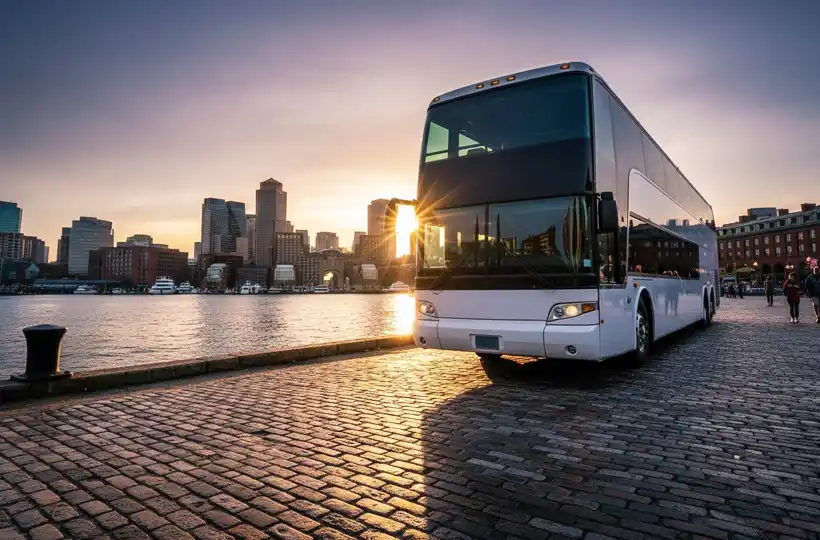
Charter bus service is the most structured option for medium to large groups traveling from Boston to Gillette Stadium during World Cup 2026. Estimated match-day travel time typically falls between 75 and 90 minutes. Passenger capacity ranges from 18–35 passengers on a minibus to 40–55 on a full-size motorcoach. Tournament pricing can range from $1,200 to $2,500+ depending on vehicle size and duration, but per-person cost often becomes highly economical when divided among the group.
Advantages include everyone traveling together, a dedicated professional driver, luggage storage space, organized drop-off, and simplified post-match pickup. The primary limitation is the need for early booking due to limited fleet availability during the tournament. This option is ideal for fan clubs, alumni groups, corporate outings, and multi-family travel. Match-day risk level is low, as coordinated logistics significantly reduce uncertainty despite heavy traffic conditions.
3. MBTA Commuter Rail
The MBTA typically operates special event commuter rail service between Boston and Foxborough for major games, and expanded service is expected during the World Cup. Travel time averages 60 to 75 minutes, largely avoiding highway congestion. Ticket prices are generally under $25 round trip, making it the most affordable fixed-price option for solo travelers. Passenger capacity is high but shared, and standing-room conditions are likely during peak matches.
Advantages include predictable pricing and no parking concerns. However, schedules are limited, departure times are strict, and flexibility is minimal if a match runs long or goes into extra time. This option is best suited for budget-conscious fans comfortable with crowded environments and fixed timing. Match-day risk level is moderate due to crowd density and scheduling constraints rather than road traffic.
4. Rideshare / Taxi
Rideshare and taxi services provide flexible, on-demand transportation from Boston to Gillette Stadium. Estimated travel time on World Cup match day ranges from 60 to 100 minutes depending on congestion levels. Passenger capacity typically supports 1–4 riders in standard vehicles and up to 6 in larger SUVs. One-way pricing may range from $80 to $200+, with surge pricing highly likely before kickoff and especially after the match ends.
Advantages include easy booking through mobile apps and flexible departure timing. The main drawbacks are unpredictable costs, long post-match wait times, and congested pickup zones that can add significant delay. This option works best for small groups or last-minute planners who accept pricing variability. Match-day risk level is high, particularly for return travel when thousands of attendees request rides simultaneously.
What Is the Best Option for Group Travel?
The best option for group travel from Boston to Gillette Stadium during World Cup 2026 is typically a charter bus or minibus, especially when your group exceeds 10 passengers. Once you move beyond small-car capacity, coordination becomes the real challenge. Managing multiple vehicles, syncing departure times, ensuring everyone arrives together, organizing return logistics, and keeping track of gear such as flags or coolers all add complexity. In a high-attendance international event, even small delays can separate group members in crowded parking zones.
For groups of 15 or more, a single dedicated vehicle creates structure and predictability. One departure time, one arrival point, one staging location, and one coordinated return plan eliminate confusion. Everyone travels together, waits together, and leaves together. For corporate hosts welcoming international guests, organized transportation also demonstrates preparation and professionalism. The World Cup is not a casual outing. It is a global event, and smooth logistics significantly enhance the overall match-day experience.
What Is the Affordable Option to Get from Boston to Gillette Stadium?
The most affordable way to travel from Boston to Gillette Stadium during World Cup 2026 depends largely on your group size. For solo fans, the MBTA commuter rail is typically the cheapest fixed-price option. Couples may find rideshare appealing at first glance, but surge pricing before and after matches can quickly raise costs. What looks inexpensive initially may not stay that way once demand spikes.
For larger groups, affordability shifts toward shared transportation. If 25 fans split into seven rideshare vehicles at $150 each, that totals $1,050 one way and $2,100 round trip. A charter bus at around $2,000 round trip becomes comparable in cost but far more organized. True affordability during the World Cup means predictable total expense, not just the lowest advertised fare.
What Is the Safest Way to Travel to Gillette Stadium?
The safest way to travel from Boston to Gillette Stadium during World Cup 2026 is through professionally operated transportation such as a charter bus or private car service. Safety goes beyond driving skill. It includes licensed drivers, commercial insurance coverage, structured pickup zones, planned routing, and coordinated late-night return arrangements. During a global tournament, crowd control and traffic management become part of the overall safety equation.
Professional services provide background-checked chauffeurs and well-maintained commercial vehicles, reducing uncertainty compared to spontaneous rideshare pickups. After evening matches, Foxborough parking areas can become congested and confusing. A coordinated pickup plan minimizes exposure to chaotic staging zones and long waits. For families with children or international visitors unfamiliar with the area, structured transport significantly enhances comfort, predictability, and overall security.
Is It Worth Renting a Charter Bus for World Cup Matches?
Renting a charter bus for World Cup matches at Gillette Stadium is often worth it, especially for organized groups. Unlike regular NFL games, World Cup events attract global audiences, increased media presence, stricter security protocols, and extended traffic congestion that can last for hours. The scale is larger, and the logistical pressure is noticeably higher.
A charter bus creates structure within that complexity. Instead of coordinating multiple phones, splitting into separate vehicles, dealing with surge pricing, or trying to regroup in crowded parking lots, you operate with one driver, one vehicle, one departure plan, and one clear return strategy. For fan clubs and alumni groups, the shared ride also strengthens the overall experience, turning transportation into part of the celebration itself.
How Far in Advance Should You Book for World Cup 2026?
You should book transportation for World Cup 2026 as early as possible, ideally several months in advance once official match schedules are confirmed. Major global tournaments significantly increase regional demand for charter buses, executive vehicles, and private transportation. Waiting too long can sharply limit your options, especially for larger groups.
Fleet availability tightens quickly as kickoff dates approach, particularly after group stage announcements and high-profile match confirmations. Large motorcoaches and premium vehicles will be in strong demand across Massachusetts. Securing transportation early ensures better vehicle selection, stable pricing, and smoother logistical planning.
Can We Rent a Charter Bus for Multiple Match Days?
Yes, you can rent a charter bus for multiple match days during World Cup 2026 at Gillette Stadium. Multi-day transportation is common for visitors attending several matches, corporate hospitality programs, and out-of-state fan groups staying in Boston throughout the tournament.
A multi-day rental provides consistent pickup times, dedicated driver coordination, and streamlined logistics across your entire schedule. This continuity reduces uncertainty and simplifies transportation planning for the duration of your World Cup experience.
Can a Charter Bus Park at Gillette Stadium?
Yes, charter buses can typically park at Gillette Stadium during large-scale events like the World Cup. Event organizers usually designate specific bus parking areas separate from general vehicle lots to manage traffic flow more efficiently.
These designated zones provide organized staging, clearer regrouping points, and a defined return pickup location for groups. While departure traffic congestion may still occur, structured bus parking significantly reduces confusion compared to standard public parking areas.
What Happens After the Match Ends?
After the match ends at Gillette Stadium, transportation becomes the real test of your planning. Tens of thousands of fans exit at once, Route 1 slows dramatically, parking lots take time to clear, and rideshare demand spikes immediately. In many cases, return travel takes longer than arrival.
Without pre-arranged pickup, you may face long waits, extended walks to staging zones, and surge pricing. With coordinated transportation, your driver waits in a designated area, your group boards together, and departure begins as traffic flows. For late matches, this can mean arriving back in Boston hours earlier.
